



GLS 的钱币相册
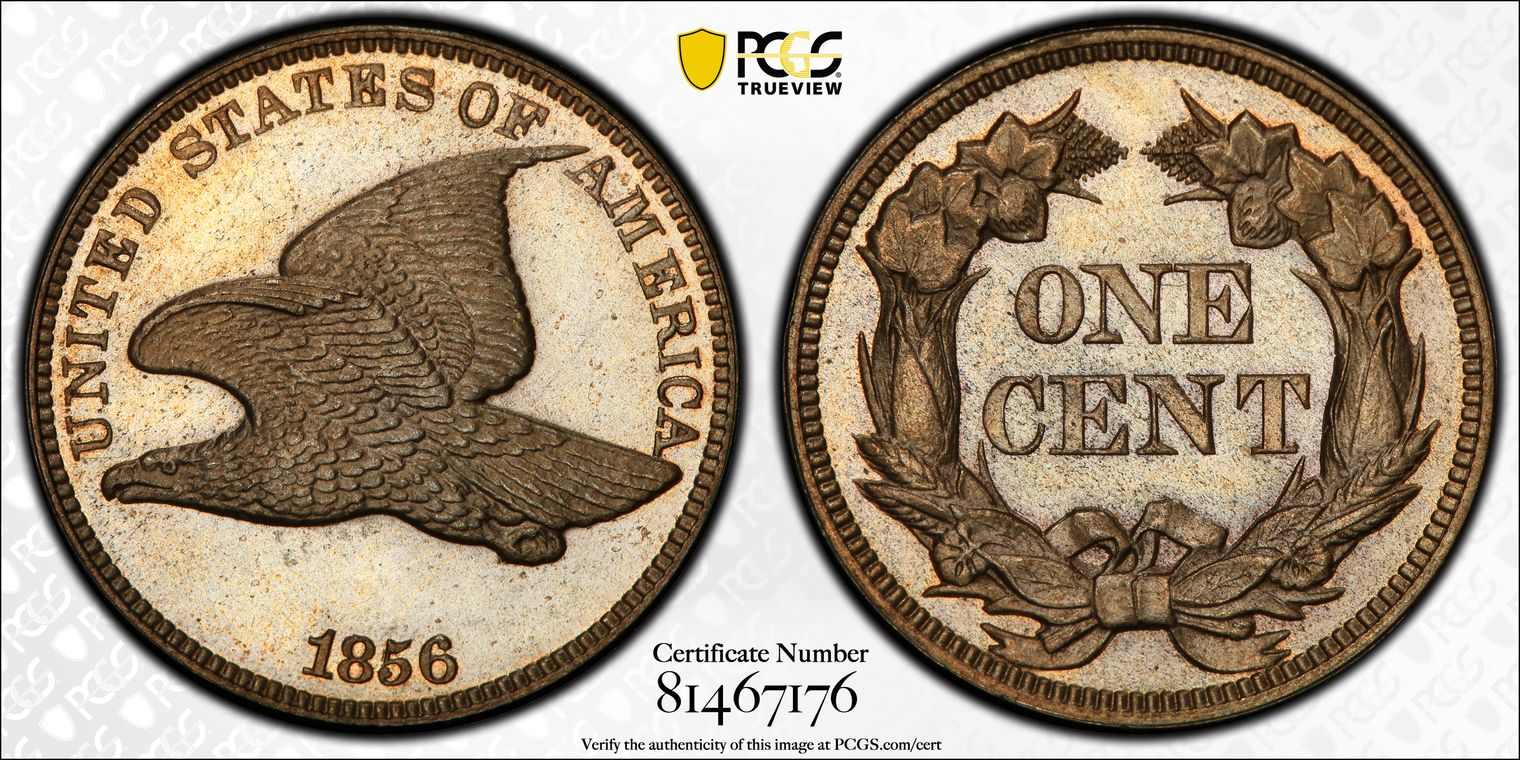
1856 1C MS66 PCGS CAC EEPS, Snow-3 Die Variety, Die Stage A. Provenance: Ex Stewart Blay Collection. Esteemed by the legendary collector Stewart Blay as the finest Mint State 1856 Flying Eagle, this exceptional coin boasts remarkable eye appeal, a beauty that is absolutely stunning in person (uploaded photos at least begin to demonstrate that eye appeal, though it's not clear from the cert photo). It represents a pinnacle of quality, being one of only two Snow-3 examples graded MS66 by PCGS (a third MS66 is actually a Snow-5, and Flying Eagle expert Rick Snow has determined all Snow-5s are actually Proofs). This significant coin set a record auction price of $343,125 in November 2023 (Great Collections - Nov 12, 2023 - GC Item ID: 1456023), the highest ever achieved for any 1856 Flying Eagle cent, and in fact the highest for any Flying Eagle cent. The Snow-3 die variety, along with the Snow-1, belongs to the "Original Striking" of 1856 Flying Eagles (Snow-5s may also have been part of the Original striking). These Original coins were strategically presented to key figures in the U.S. government to advocate for the passage of the Small Cents Act of 1857. Following the striking of rare Snow-1 Proofs and then the unique "Bluebird" Proof Snow-3 (also Die Stage A), Mint State Snow-3s, including this Die Stage A example, were produced. All known Snow-3 coins (apart from the "Bluebird") exhibit some weakness of strike, typically noticeable on the eagle's breast feathers or the reverse leaves. This coin exhibits some weakness on the breast feathers, which is especially noticeable when comparing its cert with the cert of the “Bluebird” (cert #38725098). Die Stage A coins, identified by diagonal die lines through UNITED, have Proof-like medium mirrors, so someone not paying attention to the weakness of strike could misattribute this coin as a Proof.
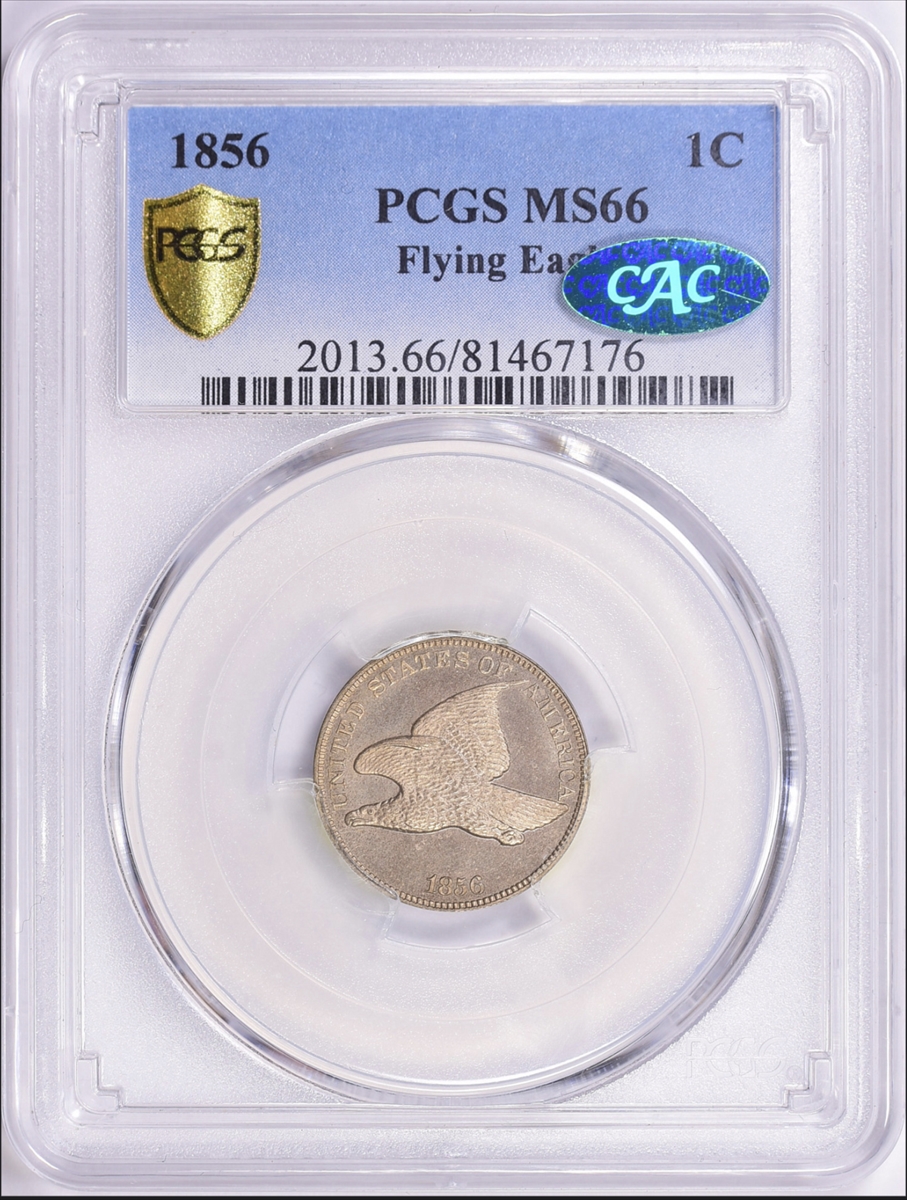
1856 1C MS66 PCGS CAC EEPS, Snow-3 Die Variety, Die Stage A. Provenance: Ex Stewart Blay Collection. Esteemed by the legendary collector Stewart Blay as the finest Mint State 1856 Flying Eagle, this exceptional coin boasts remarkable eye appeal, a beauty that is absolutely stunning in person (uploaded photos at least begin to demonstrate that eye appeal, though it's not clear from the cert photo). It represents a pinnacle of quality, being one of only two Snow-3 examples graded MS66 by PCGS (a third MS66 is actually a Snow-5, and Flying Eagle expert Rick Snow has determined all Snow-5s are actually Proofs). This significant coin set a record auction price of $343,125 in November 2023 (Great Collections - Nov 12, 2023 - GC Item ID: 1456023), the highest ever achieved for any 1856 Flying Eagle cent, and in fact the highest for any Flying Eagle cent. The Snow-3 die variety, along with the Snow-1, belongs to the "Original Striking" of 1856 Flying Eagles (Snow-5s may also have been part of the Original striking). These Original coins were strategically presented to key figures in the U.S. government to advocate for the passage of the Small Cents Act of 1857. Following the striking of rare Snow-1 Proofs and then the unique "Bluebird" Proof Snow-3 (also Die Stage A), Mint State Snow-3s, including this Die Stage A example, were produced. All known Snow-3 coins (apart from the "Bluebird") exhibit some weakness of strike, typically noticeable on the eagle's breast feathers or the reverse leaves. This coin exhibits some weakness on the breast feathers, which is especially noticeable when comparing its cert with the cert of the “Bluebird” (cert #38725098). Die Stage A coins, identified by diagonal die lines through UNITED, have Proof-like medium mirrors, so someone not paying attention to the weakness of strike could misattribute this coin as a Proof.
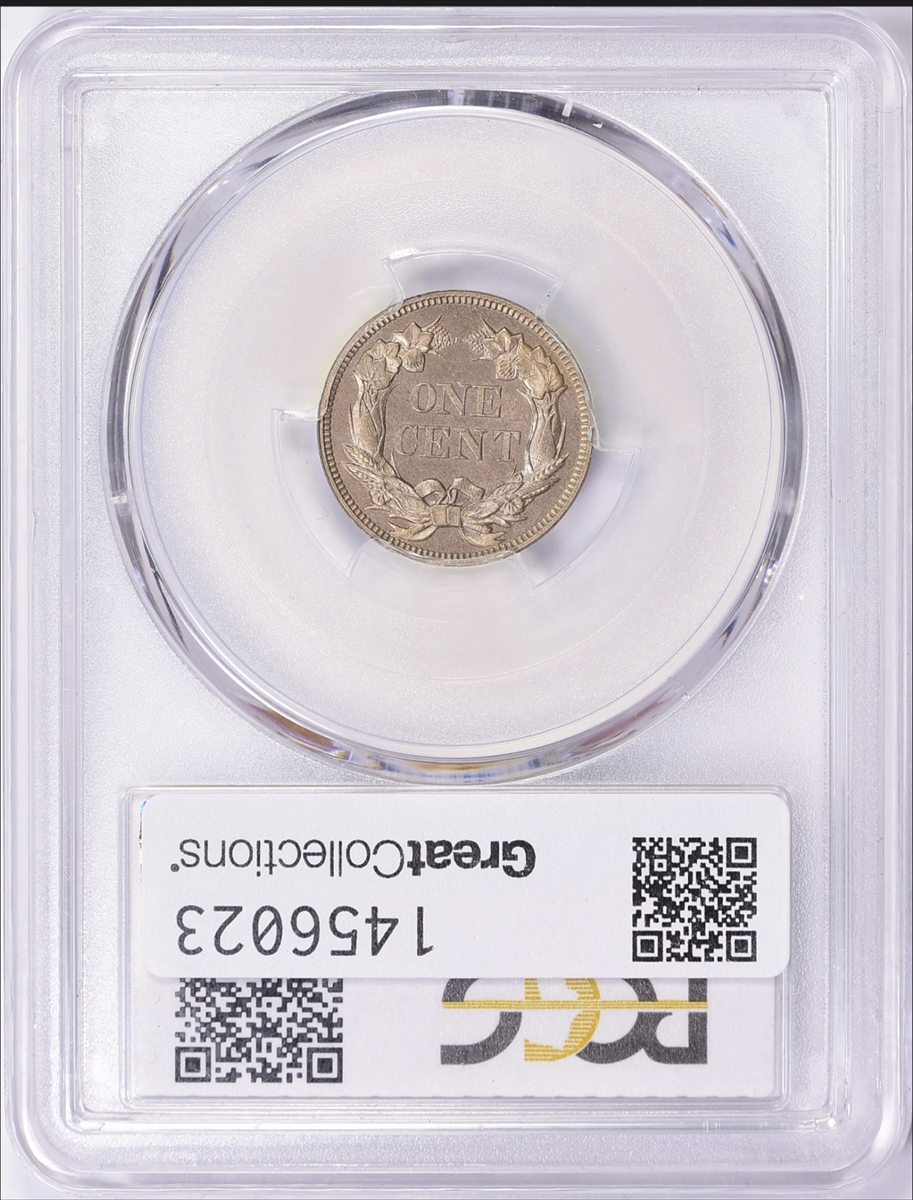
1856 1C MS66 PCGS CAC EEPS, Snow-3 Die Variety, Die Stage A. Provenance: Ex Stewart Blay Collection. Esteemed by the legendary collector Stewart Blay as the finest Mint State 1856 Flying Eagle, this exceptional coin boasts remarkable eye appeal, a beauty that is absolutely stunning in person (uploaded photos at least begin to demonstrate that eye appeal, though it's not clear from the cert photo). It represents a pinnacle of quality, being one of only two Snow-3 examples graded MS66 by PCGS (a third MS66 is actually a Snow-5, and Flying Eagle expert Rick Snow has determined all Snow-5s are actually Proofs). This significant coin set a record auction price of $343,125 in November 2023 (Great Collections - Nov 12, 2023 - GC Item ID: 1456023), the highest ever achieved for any 1856 Flying Eagle cent, and in fact the highest for any Flying Eagle cent. The Snow-3 die variety, along with the Snow-1, belongs to the "Original Striking" of 1856 Flying Eagles (Snow-5s may also have been part of the Original striking). These Original coins were strategically presented to key figures in the U.S. government to advocate for the passage of the Small Cents Act of 1857. Following the striking of rare Snow-1 Proofs and then the unique "Bluebird" Proof Snow-3 (also Die Stage A), Mint State Snow-3s, including this Die Stage A example, were produced. All known Snow-3 coins (apart from the "Bluebird") exhibit some weakness of strike, typically noticeable on the eagle's breast feathers or the reverse leaves. This coin exhibits some weakness on the breast feathers, which is especially noticeable when comparing its cert with the cert of the “Bluebird” (cert #38725098). Die Stage A coins, identified by diagonal die lines through UNITED, have Proof-like medium mirrors, so someone not paying attention to the weakness of strike could misattribute this coin as a Proof.
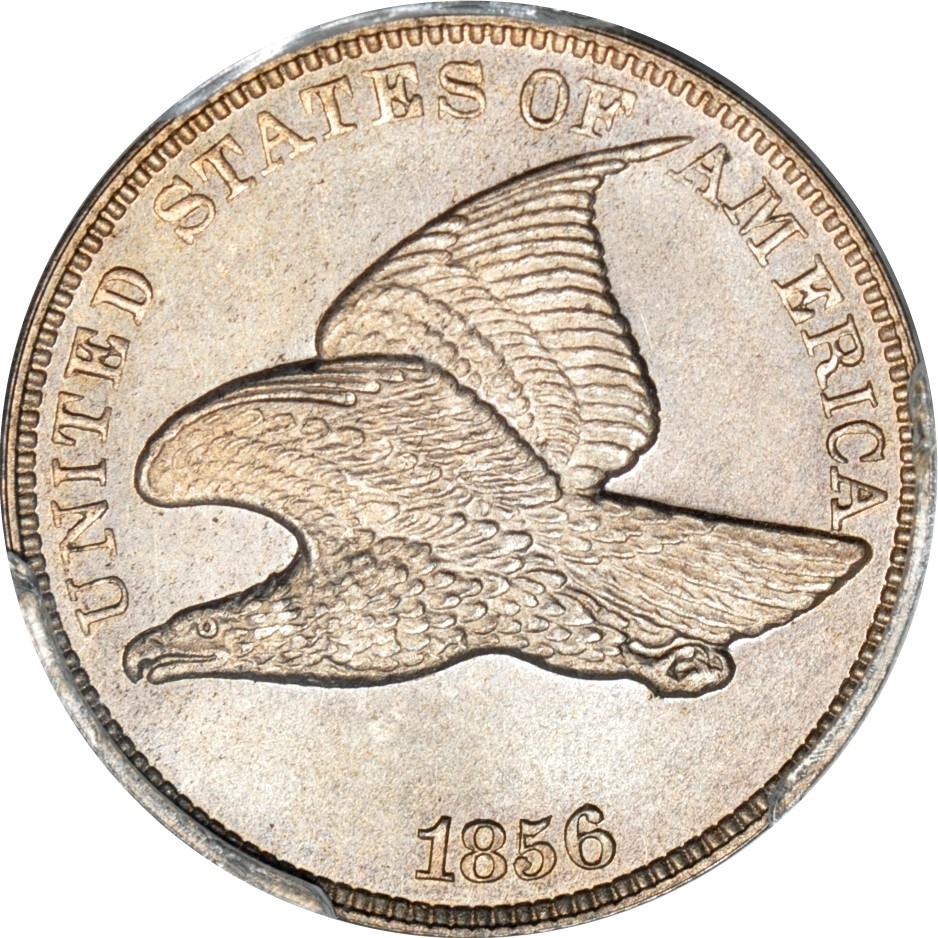
1856 1C MS66 PCGS CAC EEPS, Snow-3 Die Variety, Die Stage A. Provenance: Ex Stewart Blay Collection. Esteemed by the legendary collector Stewart Blay as the finest Mint State 1856 Flying Eagle, this exceptional coin boasts remarkable eye appeal, a beauty that is absolutely stunning in person (uploaded photos at least begin to demonstrate that eye appeal, though it's not clear from the cert photo). It represents a pinnacle of quality, being one of only two Snow-3 examples graded MS66 by PCGS (a third MS66 is actually a Snow-5, and Flying Eagle expert Rick Snow has determined all Snow-5s are actually Proofs). This significant coin set a record auction price of $343,125 in November 2023 (Great Collections - Nov 12, 2023 - GC Item ID: 1456023), the highest ever achieved for any 1856 Flying Eagle cent, and in fact the highest for any Flying Eagle cent. The Snow-3 die variety, along with the Snow-1, belongs to the "Original Striking" of 1856 Flying Eagles (Snow-5s may also have been part of the Original striking). These Original coins were strategically presented to key figures in the U.S. government to advocate for the passage of the Small Cents Act of 1857. Following the striking of rare Snow-1 Proofs and then the unique "Bluebird" Proof Snow-3 (also Die Stage A), Mint State Snow-3s, including this Die Stage A example, were produced. All known Snow-3 coins (apart from the "Bluebird") exhibit some weakness of strike, typically noticeable on the eagle's breast feathers or the reverse leaves. This coin exhibits some weakness on the breast feathers, which is especially noticeable when comparing its cert with the cert of the “Bluebird” (cert #38725098). Die Stage A coins, identified by diagonal die lines through UNITED, have Proof-like medium mirrors, so someone not paying attention to the weakness of strike could misattribute this coin as a Proof.
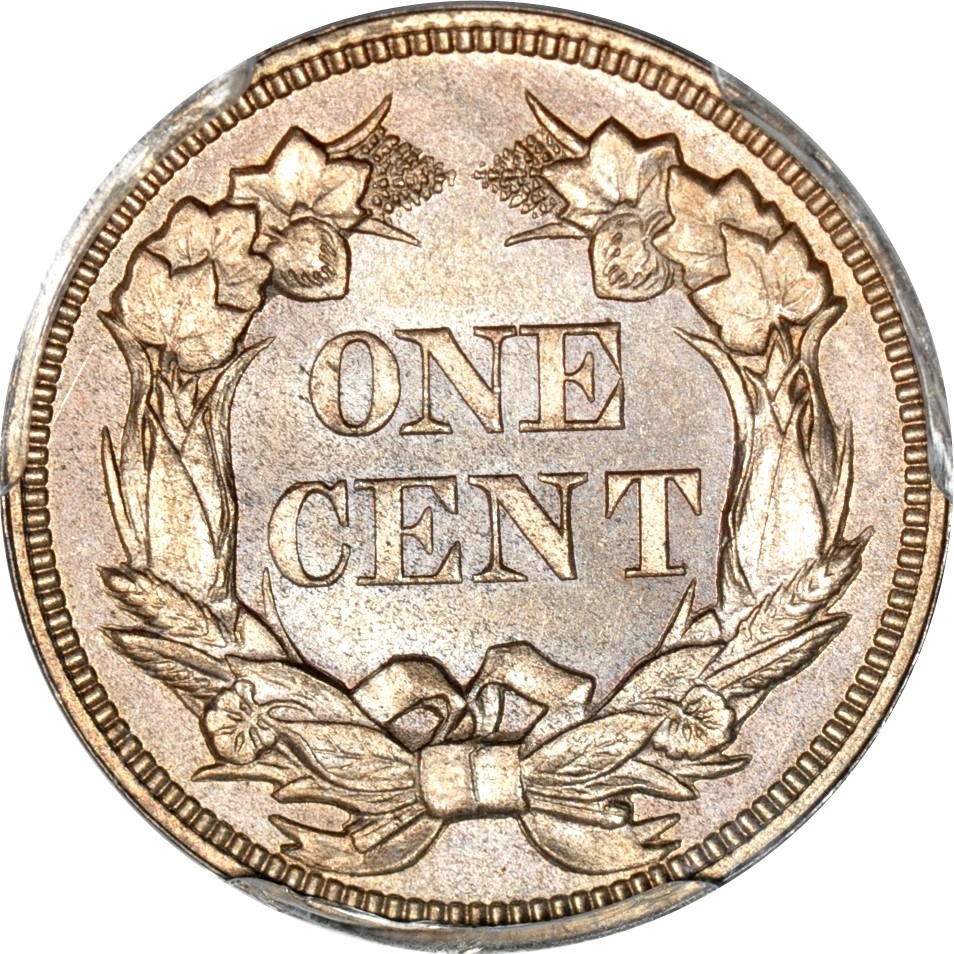
1856 1C MS66 PCGS CAC EEPS, Snow-3 Die Variety, Die Stage A. Provenance: Ex Stewart Blay Collection. Esteemed by the legendary collector Stewart Blay as the finest Mint State 1856 Flying Eagle, this exceptional coin boasts remarkable eye appeal, a beauty that is absolutely stunning in person (uploaded photos at least begin to demonstrate that eye appeal, though it's not clear from the cert photo). It represents a pinnacle of quality, being one of only two Snow-3 examples graded MS66 by PCGS (a third MS66 is actually a Snow-5, and Flying Eagle expert Rick Snow has determined all Snow-5s are actually Proofs). This significant coin set a record auction price of $343,125 in November 2023 (Great Collections - Nov 12, 2023 - GC Item ID: 1456023), the highest ever achieved for any 1856 Flying Eagle cent, and in fact the highest for any Flying Eagle cent. The Snow-3 die variety, along with the Snow-1, belongs to the "Original Striking" of 1856 Flying Eagles (Snow-5s may also have been part of the Original striking). These Original coins were strategically presented to key figures in the U.S. government to advocate for the passage of the Small Cents Act of 1857. Following the striking of rare Snow-1 Proofs and then the unique "Bluebird" Proof Snow-3 (also Die Stage A), Mint State Snow-3s, including this Die Stage A example, were produced. All known Snow-3 coins (apart from the "Bluebird") exhibit some weakness of strike, typically noticeable on the eagle's breast feathers or the reverse leaves. This coin exhibits some weakness on the breast feathers, which is especially noticeable when comparing its cert with the cert of the “Bluebird” (cert #38725098). Die Stage A coins, identified by diagonal die lines through UNITED, have Proof-like medium mirrors, so someone not paying attention to the weakness of strike could misattribute this coin as a Proof.
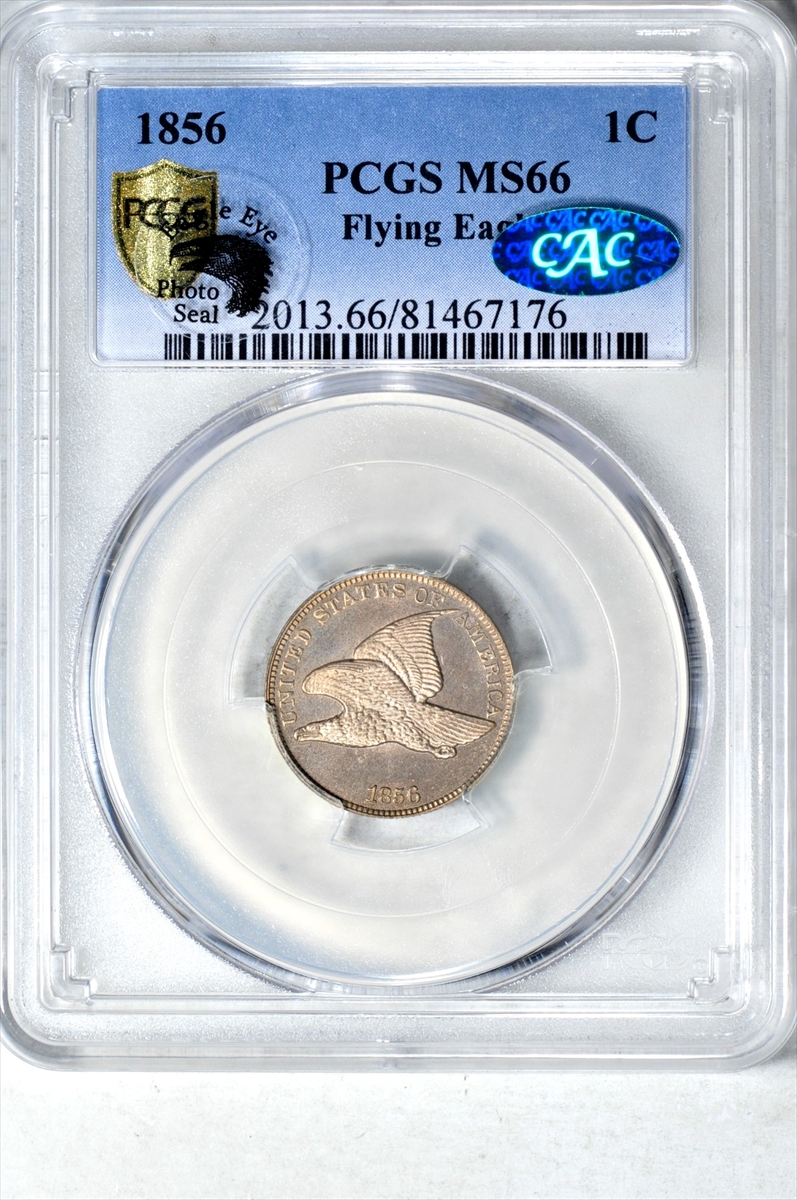
1856 1C MS66 PCGS CAC EEPS, Snow-3 Die Variety, Die Stage A. Provenance: Ex Stewart Blay Collection. Esteemed by the legendary collector Stewart Blay as the finest Mint State 1856 Flying Eagle, this exceptional coin boasts remarkable eye appeal, a beauty that is absolutely stunning in person (uploaded photos at least begin to demonstrate that eye appeal, though it's not clear from the cert photo). It represents a pinnacle of quality, being one of only two Snow-3 examples graded MS66 by PCGS (a third MS66 is actually a Snow-5, and Flying Eagle expert Rick Snow has determined all Snow-5s are actually Proofs). This significant coin set a record auction price of $343,125 in November 2023 (Great Collections - Nov 12, 2023 - GC Item ID: 1456023), the highest ever achieved for any 1856 Flying Eagle cent, and in fact the highest for any Flying Eagle cent. The Snow-3 die variety, along with the Snow-1, belongs to the "Original Striking" of 1856 Flying Eagles (Snow-5s may also have been part of the Original striking). These Original coins were strategically presented to key figures in the U.S. government to advocate for the passage of the Small Cents Act of 1857. Following the striking of rare Snow-1 Proofs and then the unique "Bluebird" Proof Snow-3 (also Die Stage A), Mint State Snow-3s, including this Die Stage A example, were produced. All known Snow-3 coins (apart from the "Bluebird") exhibit some weakness of strike, typically noticeable on the eagle's breast feathers or the reverse leaves. This coin exhibits some weakness on the breast feathers, which is especially noticeable when comparing its cert with the cert of the “Bluebird” (cert #38725098). Die Stage A coins, identified by diagonal die lines through UNITED, have Proof-like medium mirrors, so someone not paying attention to the weakness of strike could misattribute this coin as a Proof.
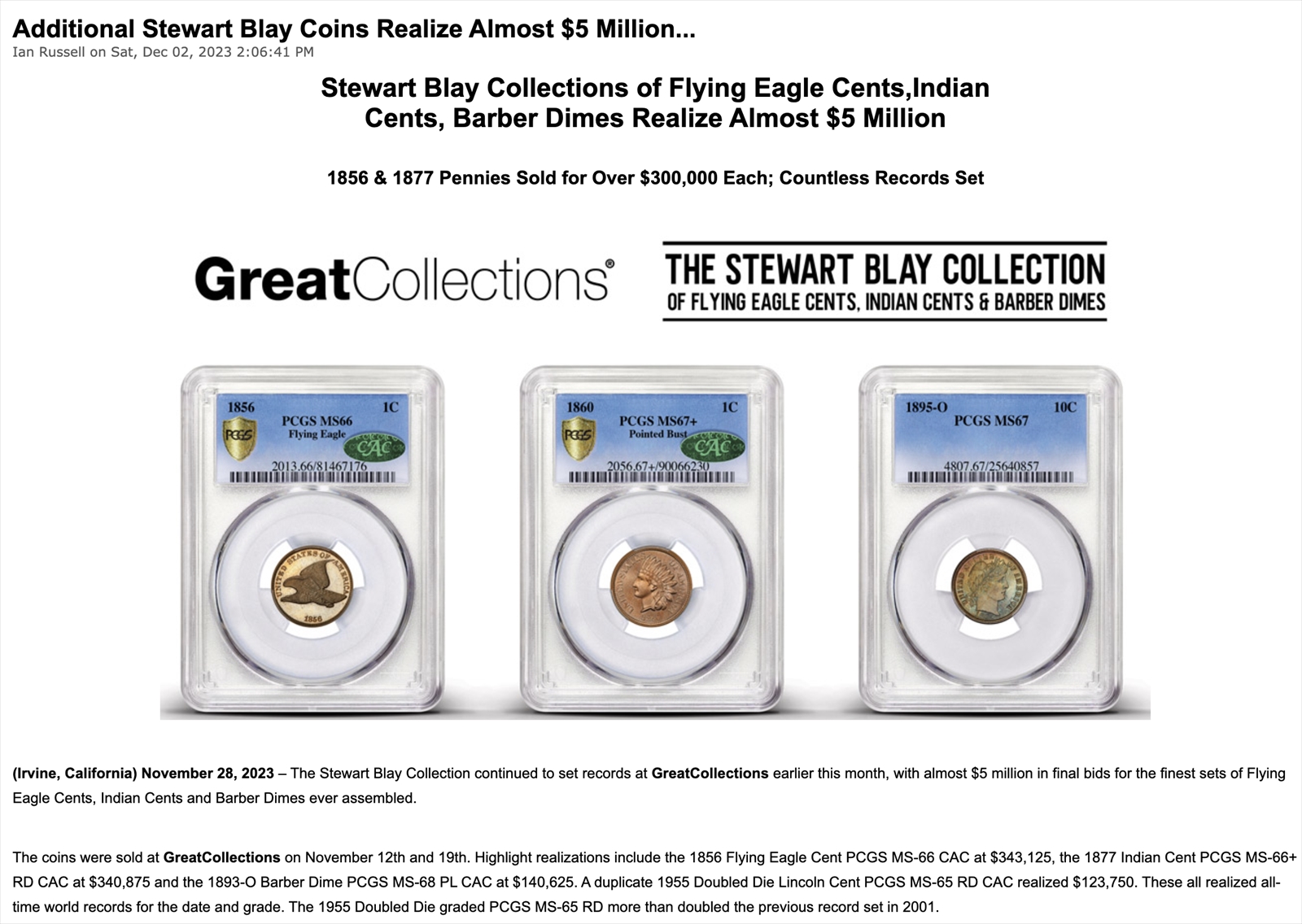
1856 1C MS66 PCGS CAC EEPS, Snow-3 Die Variety, Die Stage A. Provenance: Ex Stewart Blay Collection. Esteemed by the legendary collector Stewart Blay as the finest Mint State 1856 Flying Eagle, this exceptional coin boasts remarkable eye appeal, a beauty that is absolutely stunning in person (uploaded photos at least begin to demonstrate that eye appeal, though it's not clear from the cert photo). It represents a pinnacle of quality, being one of only two Snow-3 examples graded MS66 by PCGS (a third MS66 is actually a Snow-5, and Flying Eagle expert Rick Snow has determined all Snow-5s are actually Proofs). This significant coin set a record auction price of $343,125 in November 2023 (Great Collections - Nov 12, 2023 - GC Item ID: 1456023), the highest ever achieved for any 1856 Flying Eagle cent, and in fact the highest for any Flying Eagle cent. The Snow-3 die variety, along with the Snow-1, belongs to the "Original Striking" of 1856 Flying Eagles (Snow-5s may also have been part of the Original striking). These Original coins were strategically presented to key figures in the U.S. government to advocate for the passage of the Small Cents Act of 1857. Following the striking of rare Snow-1 Proofs and then the unique "Bluebird" Proof Snow-3 (also Die Stage A), Mint State Snow-3s, including this Die Stage A example, were produced. All known Snow-3 coins (apart from the "Bluebird") exhibit some weakness of strike, typically noticeable on the eagle's breast feathers or the reverse leaves. This coin exhibits some weakness on the breast feathers, which is especially noticeable when comparing its cert with the cert of the “Bluebird” (cert #38725098). Die Stage A coins, identified by diagonal die lines through UNITED, have Proof-like medium mirrors, so someone not paying attention to the weakness of strike could misattribute this coin as a Proof.
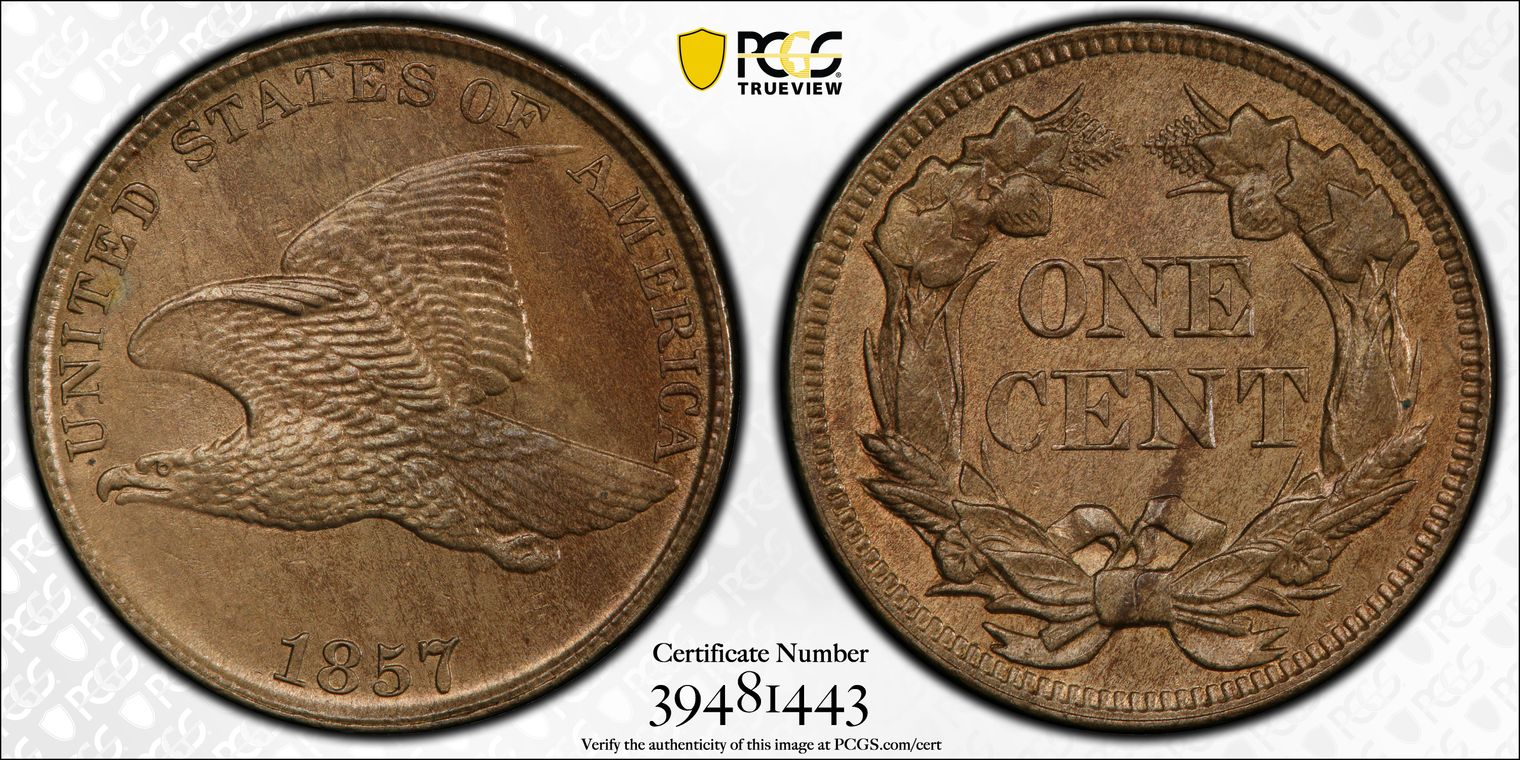
1857 1C MS64 PCGS CAC. I've seen coins graded MS66 with more marks! I have no idea how this coin was graded only MS64, but when I saw such a bargain I knew it would make a great addition to this registry set.
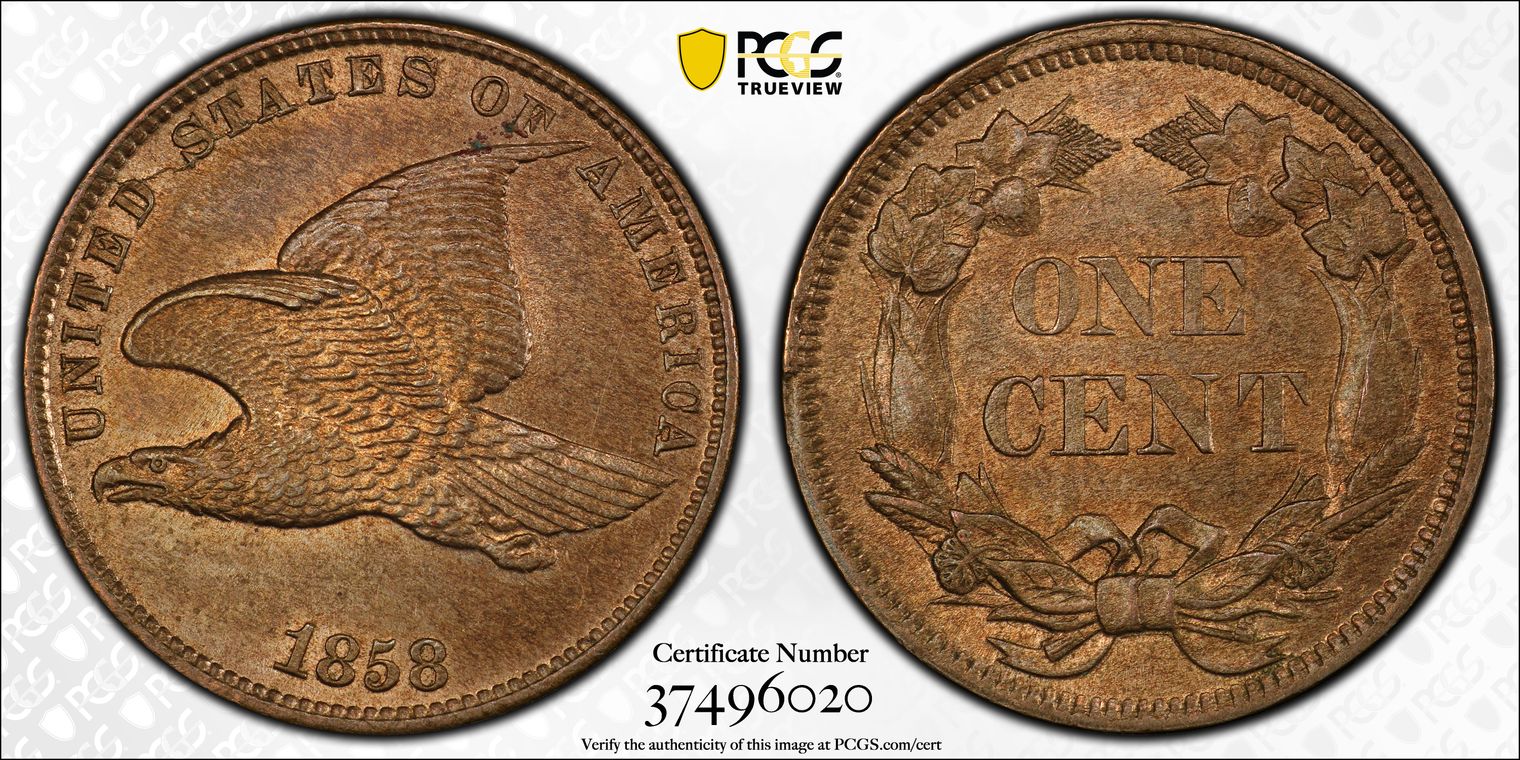
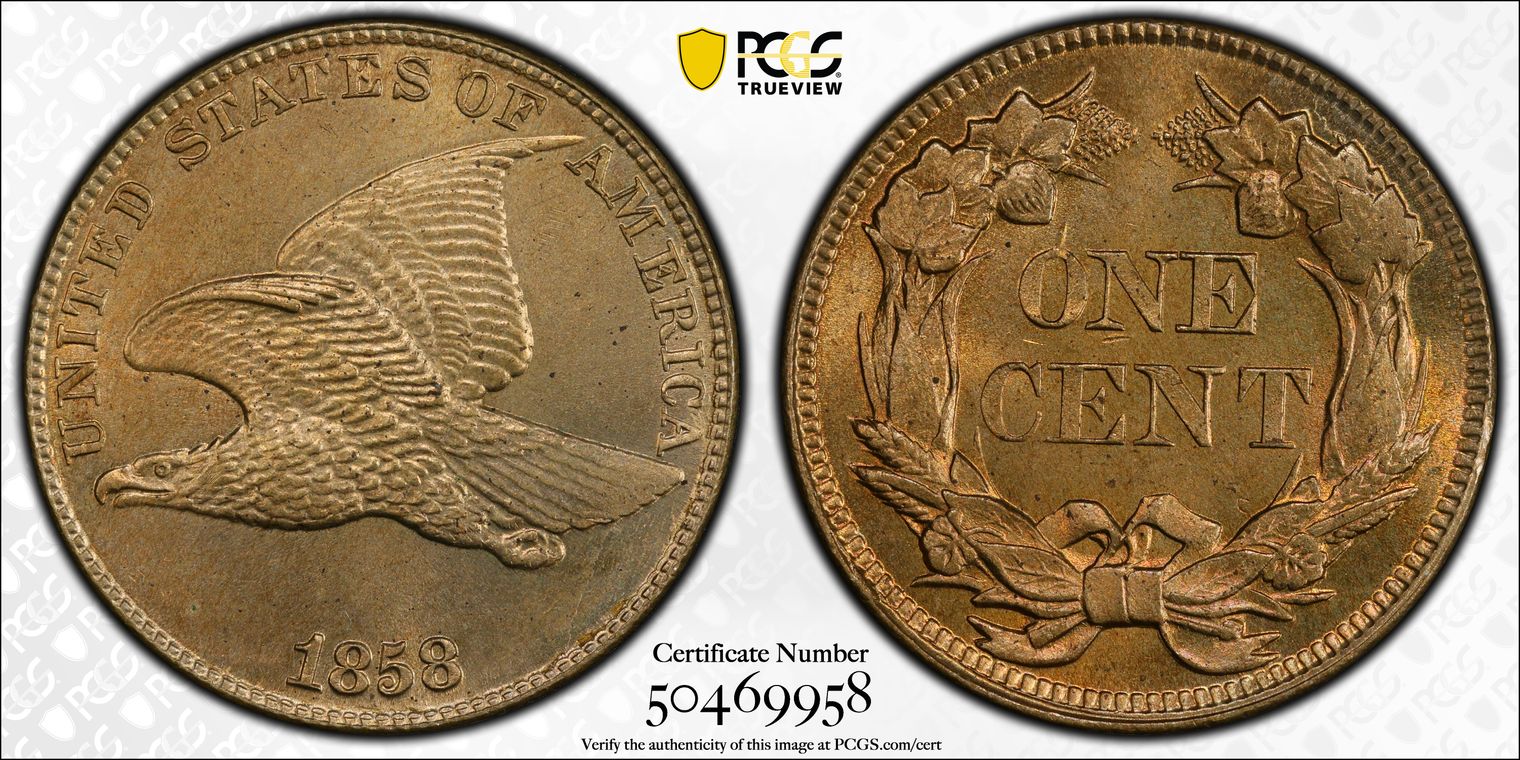
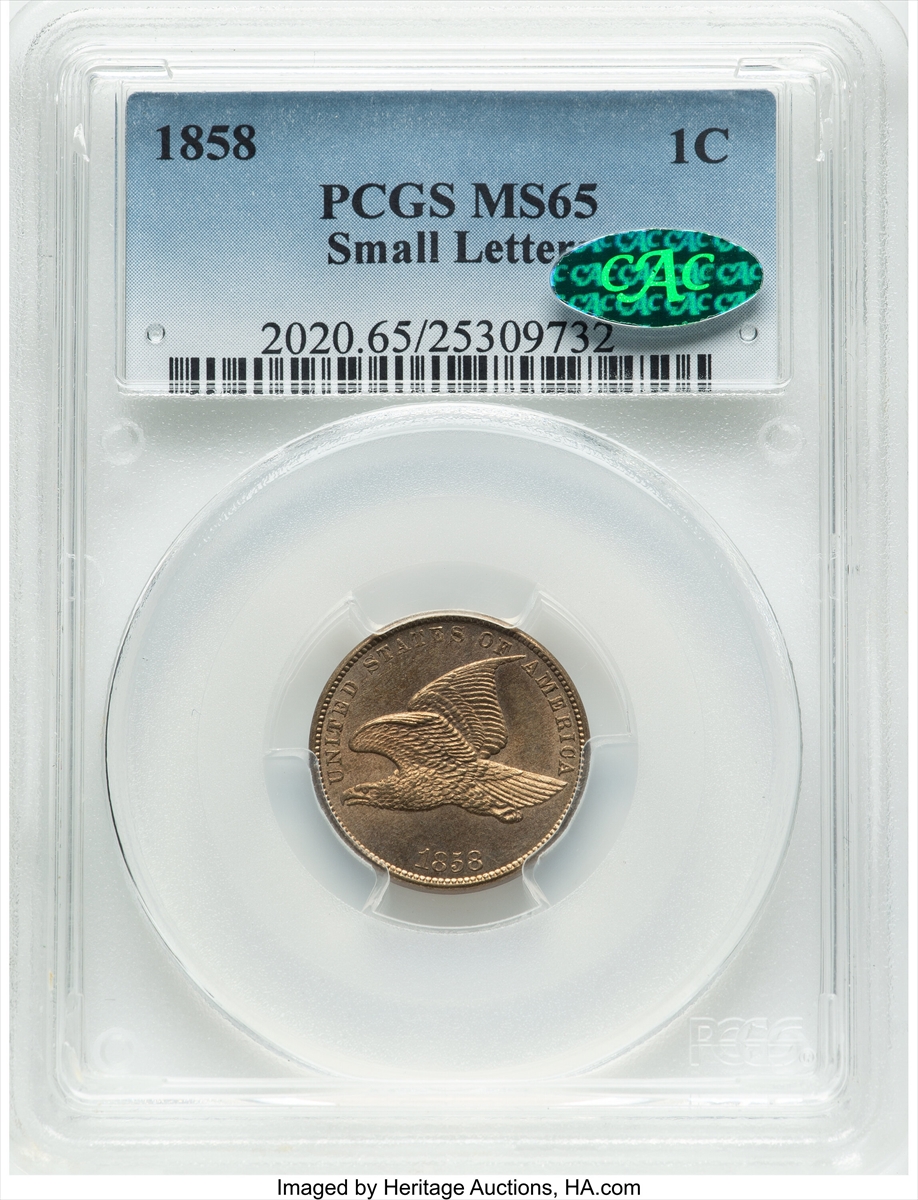
1858 (Small Letters) 1C MS65 PCGS CAC. The scarcer Open E variety.
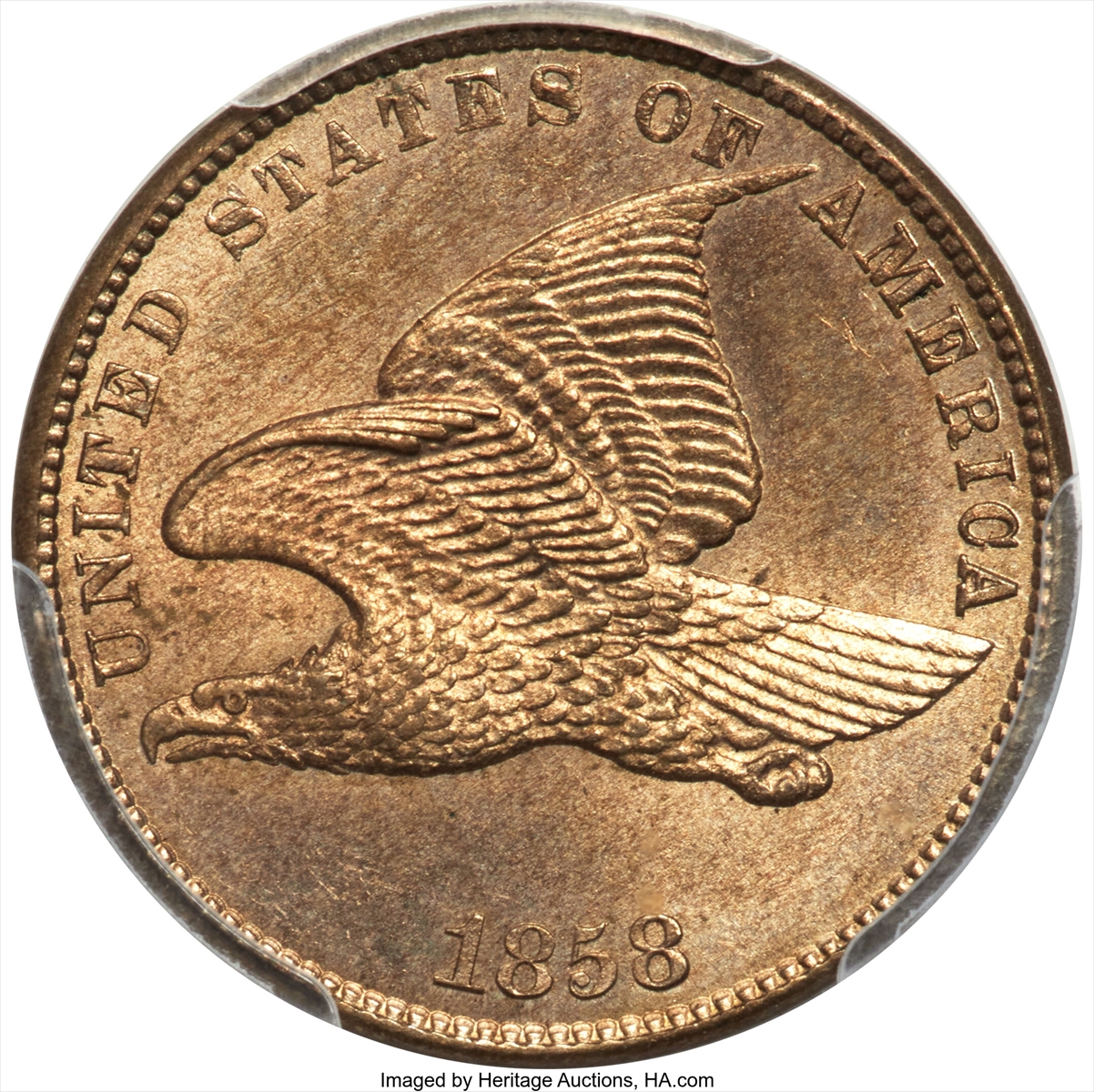
1858 (Small Letters) 1C MS65 PCGS CAC. The scarcer Open E variety.
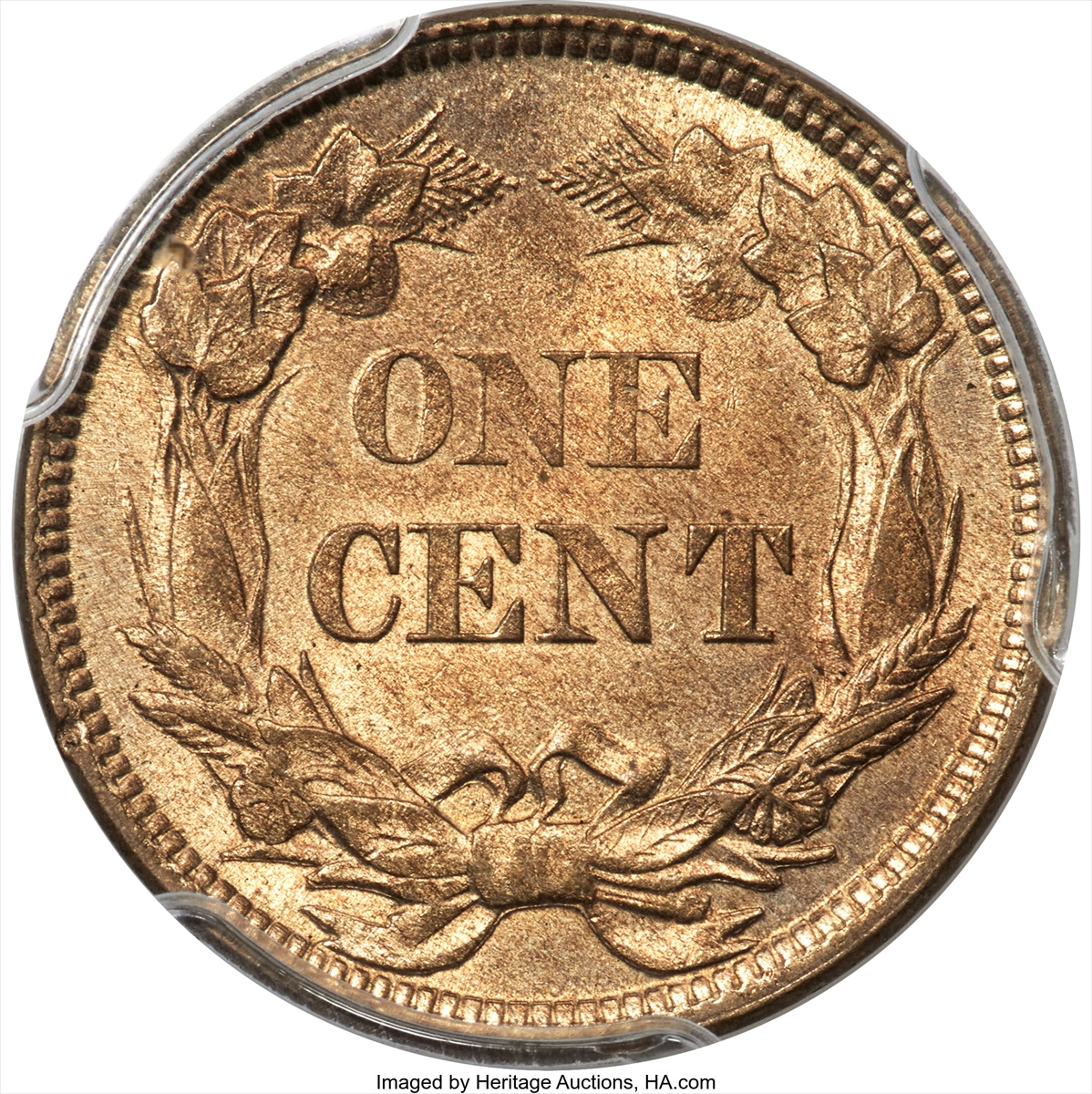
1858 (Small Letters) 1C MS65 PCGS CAC. The scarcer Open E variety.
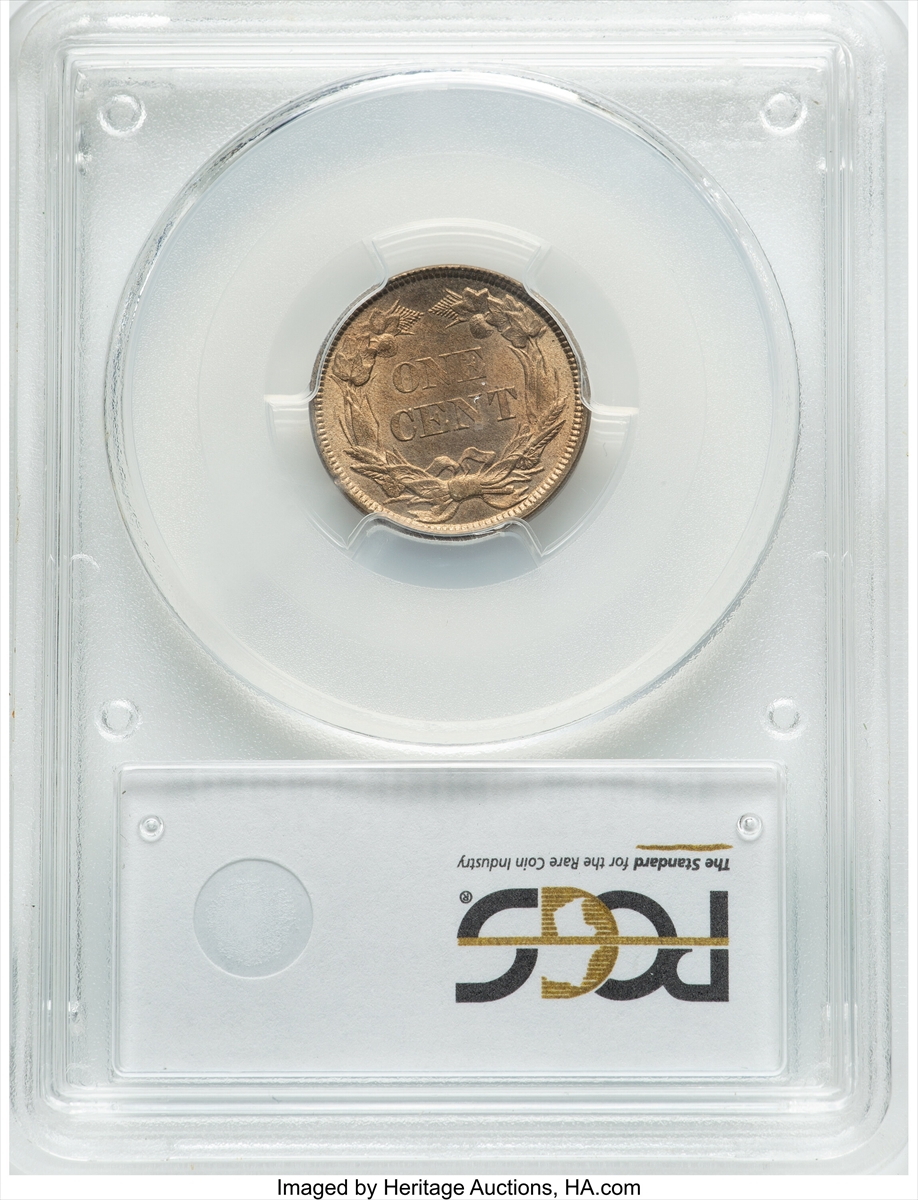
1858 (Small Letters) 1C MS65 PCGS CAC. The scarcer Open E variety.

1858/7 1C MS65 PCGS EEPS, Snow-1 Die Variety, Die Stage A. Provenance: Ex Doug Wright Collection. This fascinating 1858/7 Flying Eagle cent showcases a notable minting anomaly: the digit "8" in the date is struck over a "7," creating a distinct and collectible variety. This particular example is from Die Stage A of the Snow-1 variety. Of all known 1858/7 Snow-1 cents designated 'STRONG', only four have achieved a grade of MS65 or higher in Die Stage A (there are also some less desirable ones labelled 'STRONG', but which are actually die stage B or later). Adding to its desirability, only one of these four finest Die Stage A examples boasts a CAC. This often means collectors seeking a CAC-endorsed 1858/7 Snow-1 must choose between examples designated "Weak" or those of the much less desirable "Strong" Die Stage B. This MS65 specimen realized $49,200 at auction recently (Heritage - Feb 27, 2024 - lot #3016), having previously sold for $70,500 in 2013 (Heritage - Apr 25, 2013 - lot #4124).
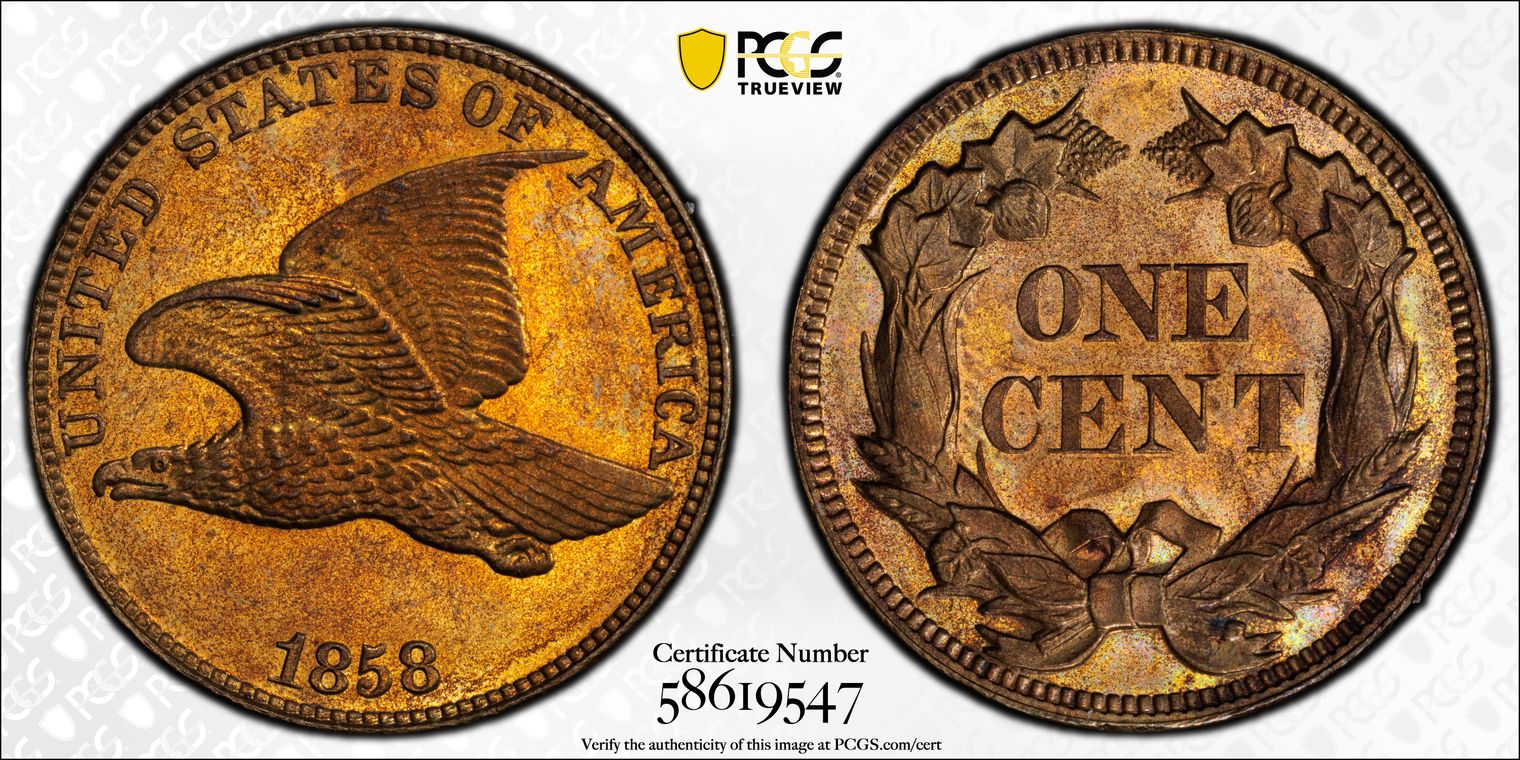
1858 (Large Letters) 1C PR65 PCGS CAC EEPS, PR1 Die Variety. Provenance: Ex Screaming Eagles and Boulder City. This 1858 Flying Eagle cent, graded PR65 with a CAC endorsement, is an exceptional example of a rare proof issue. This variety is a notable rarity, with an estimated mintage of only 100 proofs and approximately 50 survivors known today. The key to identifying a genuine 1858 Large Letters proof lies in its specific die diagnostics. Unlike the more common mint state coins which are often mistaken for proofs, this coin is confirmed as the sole proof die variety (PR1) by a combination of subtle markers: 1) Date slants up and to the right 2) Very minor doubling on "UNI" of "UNITED" 3) Diagonal die file marks in the denticles below the "18" and "58" in the date 4) A minute die file mark on the reverse, located just to the left of the 12 o'clock position. Considering CAC-endorsed examples, there are only five other CAC-endorsed coins sharing its PR65 grade and six graded higher (1 PR65+, 3 PR65+CAM, 2 PR66CAM).
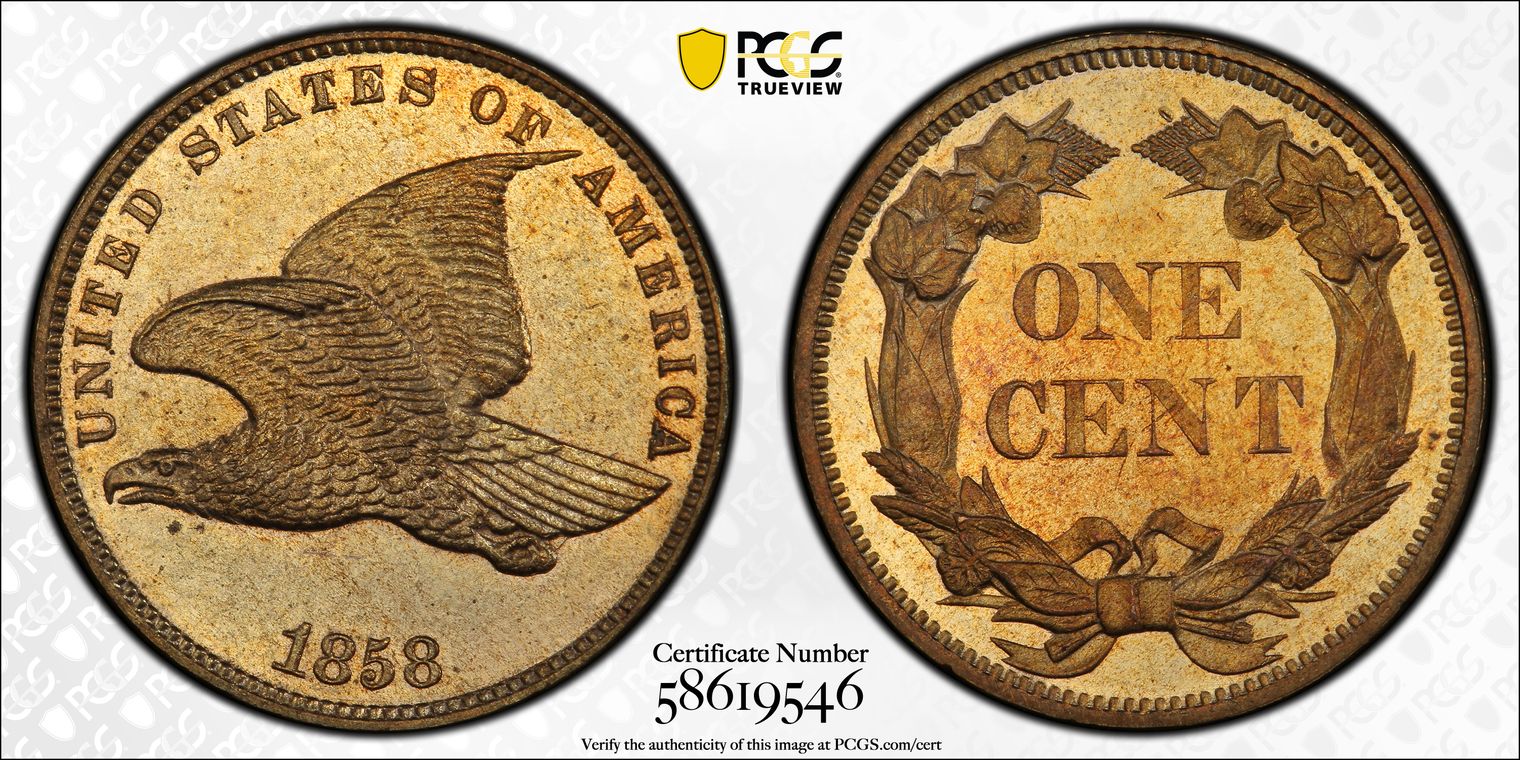
1858 (Small Letters) 1C PR65 PCGS CAC EEPS. Provenance: Ex Screaming Eagles and Bob Travis. This 1858 Flying Eagle cent, graded PR65 with a CAC endorsement, is an exceptional example of a rare proof issue, with only an estimated 200 minted. The obverse die is identified as Obv. 2 by its unique diagnostic feature: a "broken U hub" where the inner serif of the "U" in "UNITED" is missing. Obv 2 is combined with reverse die, T3-B, on the PR3 die pair, but in this case, the reverse die is T3-A (also used on PR2) as determined by a diagonal die line in denticles below the right ribbon end (T3-B is further eliminated as a possibility since the ribbon end is not connected to the denticles). Since T3-A is also used on PR2, some collectors have incorrectly identified their coins as PR2, apparently based upon diagnostics for the T3-A reverse die. But, actually the combination of Obv. 2 with T3-A is what was used to strike the PT9 of the 12-piece pattern set, which were clearly struck as Proofs. But, still one has to be careful, since some such examples have weak strike and are thus not considered Proofs. In this case, the strike is not weak at all. Further evidence it is a Proof is that it was Photo Sealed by numismatic expert, Rick Snow. Among all CAC-endorsed coins of this variety, this piece is one of only six graded PR65, with just five coins graded higher (1 PR65CAM, 3 PR66, and 1 PR66CAM).
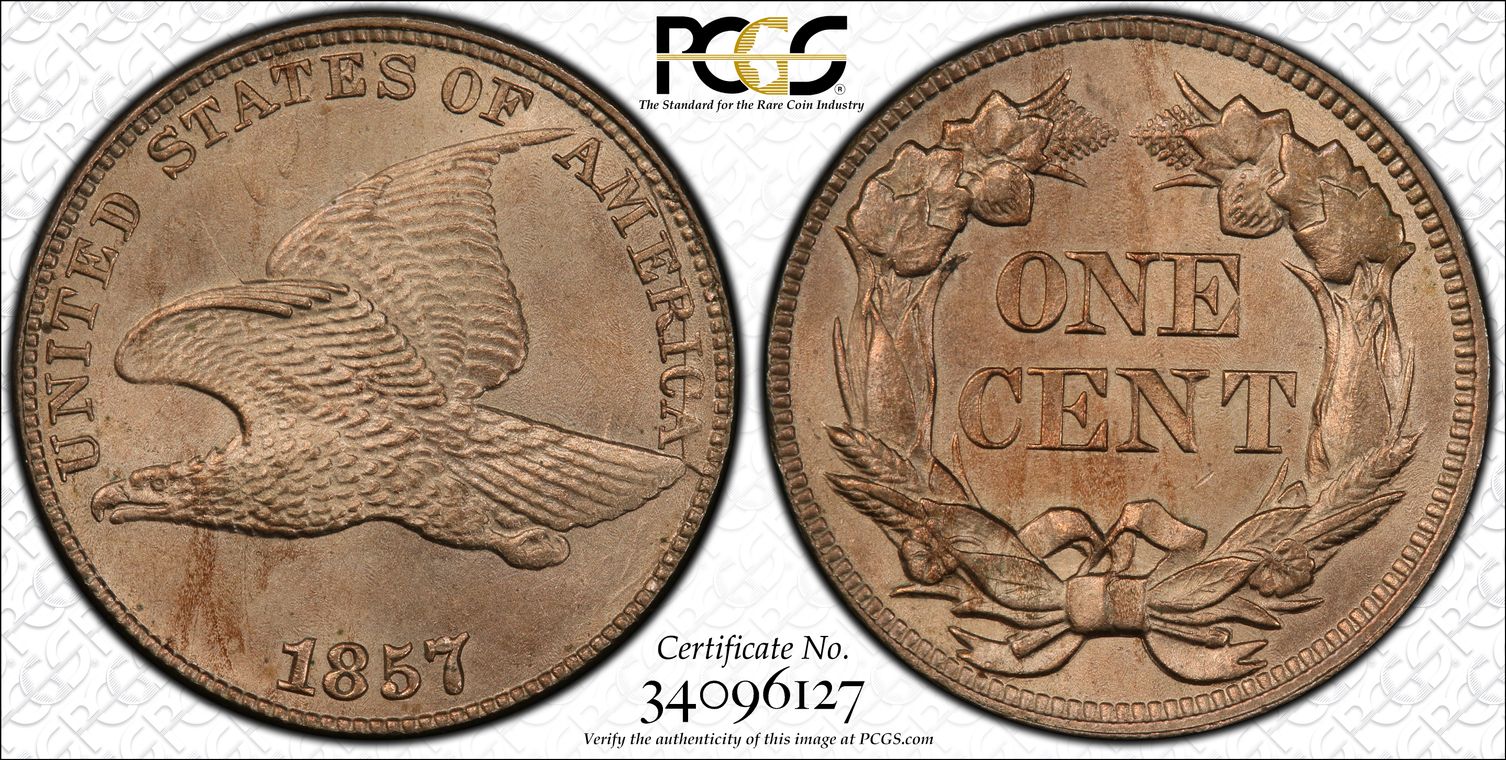
1857 1C MS65+ PCGS EEPS Snow-9 Obv. Clash w/50C,FS-402. Was MS66 NGC (Cert #: 3169246-001) when it was auctioned by Bowers & Merena at the January 2011 Tampa Bay Rarities Sale (lot #102).
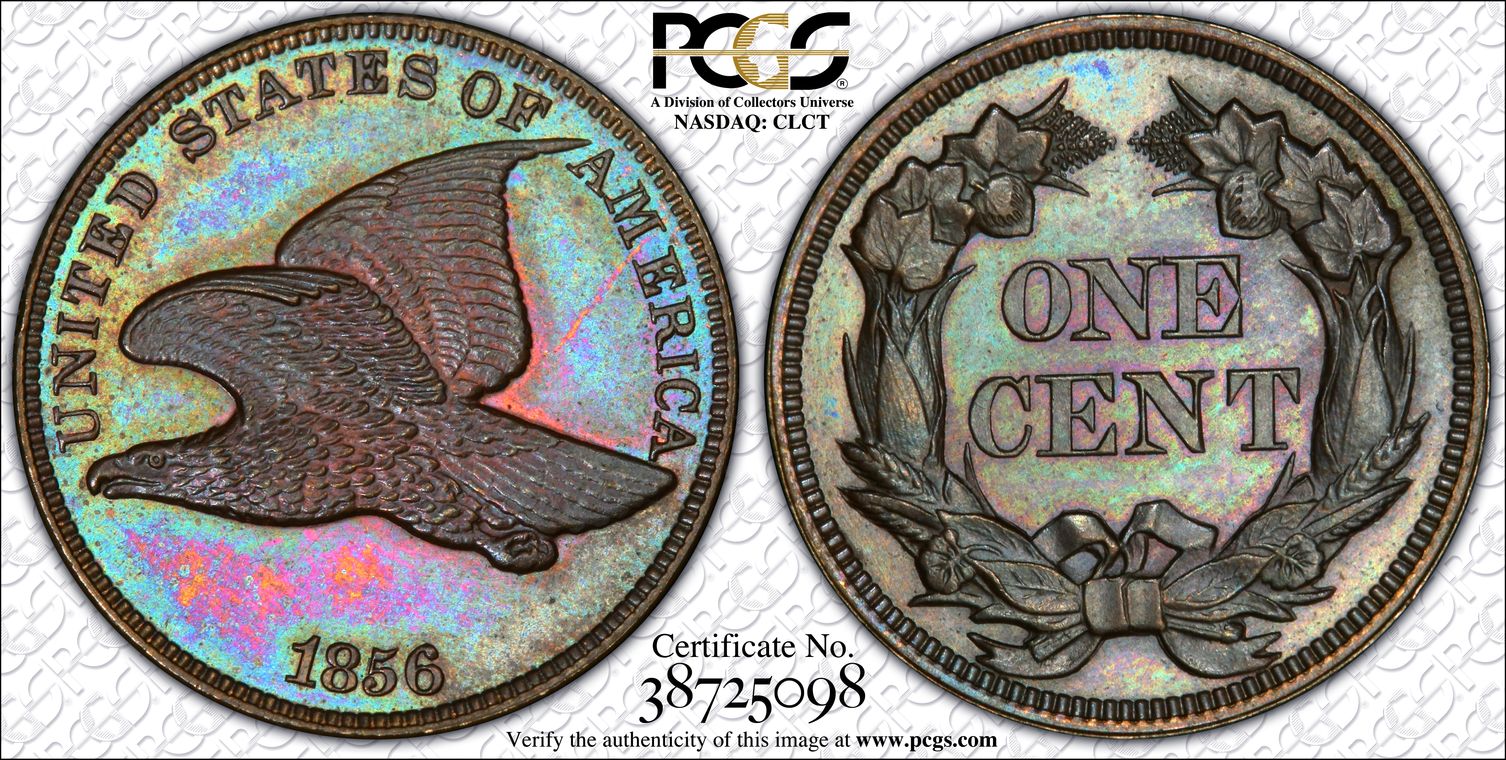
1856 1C, PR66 PCGS CAC EEPS, Snow-3 Die Variety, Die Stage A. Provenance: Ex collections of Blay, Fore, and Wright. This coin is a numismatic treasure of exceptional rarity and historical significance! Affectionately nicknamed "The Bluebird," this 1856 Flying Eagle cent stands alone as the only known example of the coveted Snow-3 die variety universally recognized as a true Proof striking. While all other Snow-3 specimens exhibit tell-tale signs of a less-than-perfect strike, demonstrating they are actually Mint State coins, this remarkable piece boasts a razor-sharp strike across all its devices! The intensely mirrored fields, a hallmark often associated with Proof coinage, are particularly striking on this specimen. However, it’s not the mirrored fields that distinguishes this coin as a Proof, since even some MS Snow-3s of Die Stage A exhibit proof-like fields, due to the fact that the Snow-3 die pair was polished. The Snow-3 variety holds a pivotal place in American numismatic history. Along with the Snow-1 die variety, coins struck from these dies represent the "Original Striking" (Snow-5s may also have been part of the Original striking). These Originals were the very coins presented to key figures, including members of the U.S. Congress and President of the United States, to garner support for the Small Cents Act of 1857. The Snow-3 coins were produced across three distinct die stages (A, B, and C). The fact that this coin exhibits Die Stage A (identified by diagonal die lines through UNITED) is crucial evidence confirming its status as an "Original" striking, definitively ruling out the possibility of it being a later restrike. Consider the rarity: This "Bluebird" stands as the sole undisputed Proof Original of the Snow-3 variety. This singular status elevates its importance even beyond the finest MS66 PCGS CAC EEPS Snow-3, since there are hundreds of MS Snow-3s, but only one Proof Snow-3. This coin is not merely a beautiful artifact; it is a tangible link to a pivotal moment in the evolution of American coinage, a testament to the artistry of early die preparation, and an unparalleled rarity within its specific die variety.
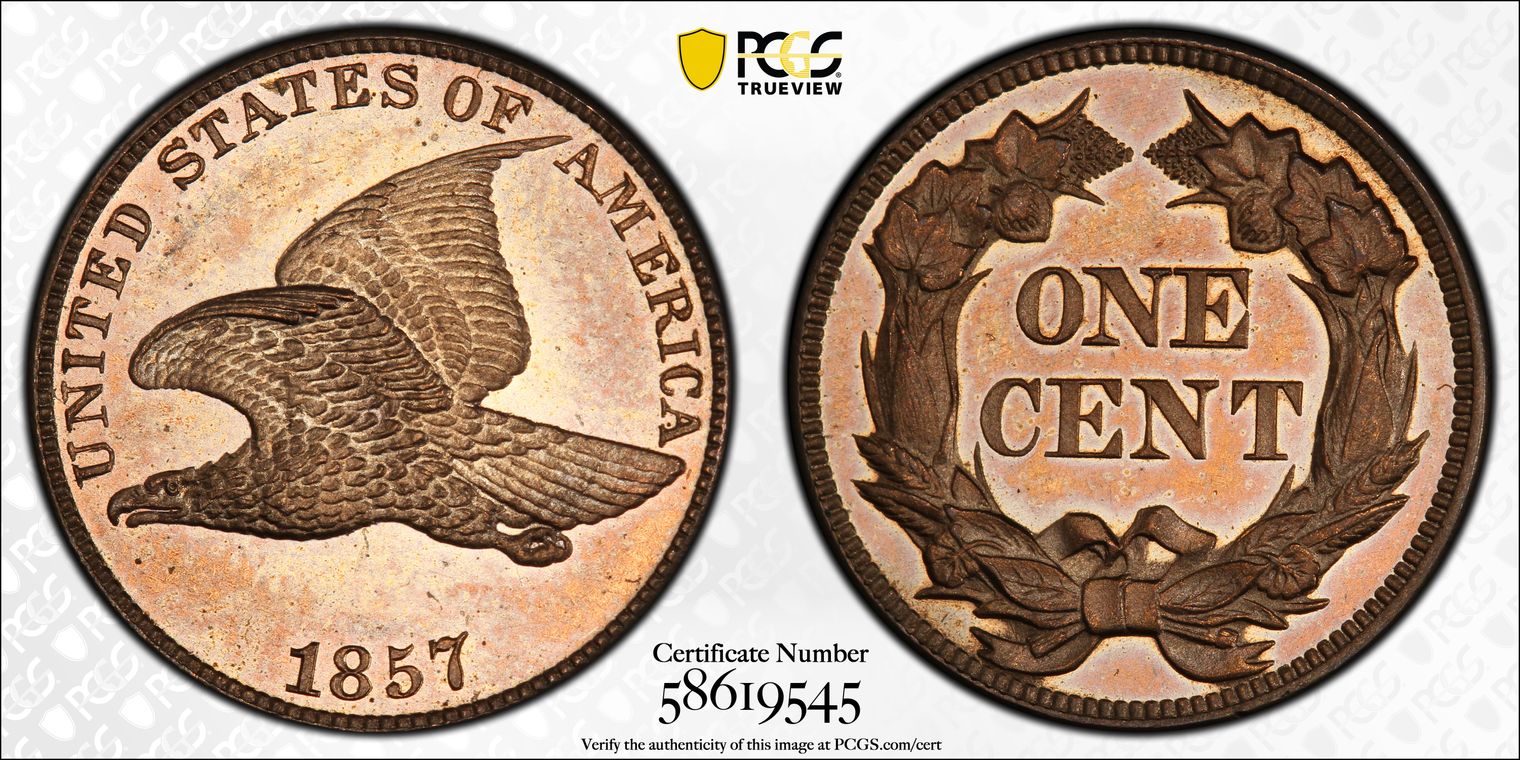
1857 1C PR64+CAM PCGS CAC EEPS, PR3 Die Variety. Provenance: Ex Screaming Eagles and Wright. This 1857 Flying Eagle cent, graded PR64+CAM with a CAC endorsement, is a spectacular example of a rare proof issue. A striking coin with deeply mirrored fields and fully frosted devices, it possesses an amazing eye appeal that truly sets it apart. While Mint State 1857 Flying Eagle cents are relatively common, the total mintage for all 1857 Proof varieties is exceptionally low, estimated by numismatic expert Rick Snow to be as few as 50 pieces. This coin is definitively identified as the PR3 die variety by a key diagnostic: a bold diagonal die file mark above the "N" in "UNITED." This specific marker confirms its status as a genuine proof, a crucial distinction given that many mint-state coins are often misattributed due to their proof-like fields. Considering CAC-endorsed examples, this coin is the sole one graded PR64+CAM, with only a handful of examples graded higher (3 PR65CAM, 1 PR66, and 1 PR66CAM).
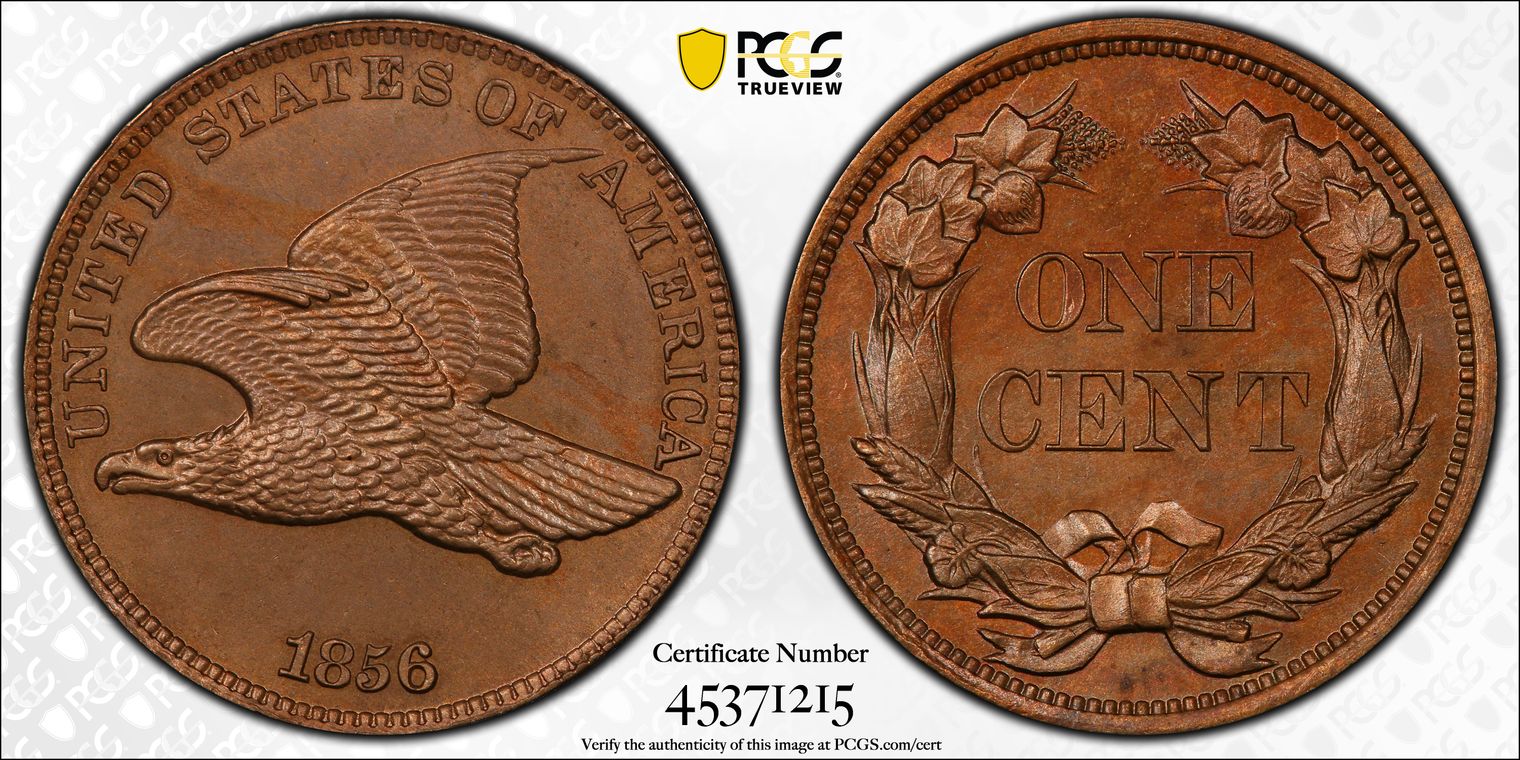
1856 1C PR65 PCGS CAC EEPS, Snow-9 Die Variety. Provenance: Ex Joseph P. Gorrell Collection. Considered by leading expert Rick Snow as a strong contender for the finest surviving example of the Snow-9 die variety, as he noted in two auction descriptions (Heritage, lot #3291, Nov 19, 2020 -and- Heritage, lot #4408, Jan 8, 2003): "Richard Snow believes that this Gem could easily be the finest survivor of the Snow-9 die pair." Close examination reveals minor strike-through debris on the "1" and "O" of "ONE" on the reverse. These subtle characteristics, often mistaken for post-strike marks, were actually imparted at the time this coin was minted and should not have held back this coin's grade. Beyond those characteristics which should not be grade-limiting, this coin is very nearly perfect. The Snow-9 die variety represents the most common of the 1856 Flying Eagle cents. The majority of the Restrike Proofs produced for collectors well after the initial 1856 strikings are attributed to the Snow-9 dies. This later, more substantial production occurred as collector interest in the original, VIP-distributed 1856 Flying Eagles grew. This PR65 CAC Snow-9 offers a fascinating perspective on the collecting history of this early small cent. While the Snow-9 is the most readily encountered variety, finding one of such exceptional quality, potentially the finest of its kind, underscores the enduring appeal and meticulous study of these historic coins.
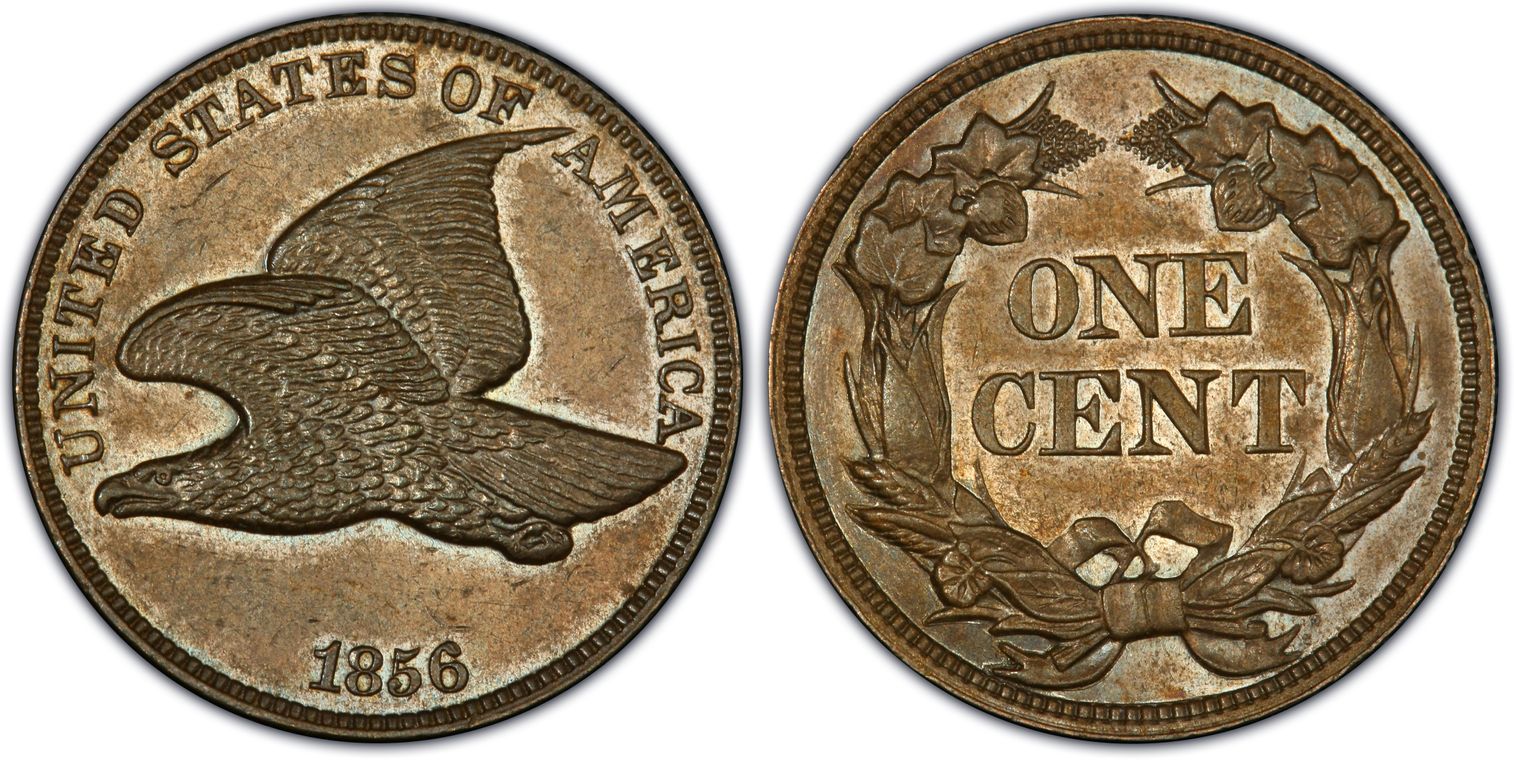
1856 1C, PR64 PCGS CAC EEPS, Snow-1 Die Variety. Provenance: Ex Fore and Wright. This remarkable 1856 Flying Eagle cent is the finest known example of the very rare Snow-1 die (with only twelve known). The Snow-1 and Snow-3 die varieties hold a significant place in American numismatic history. Coins struck from these dies represent the "Original Striking" of 1856 Flying Eagles, the very pieces presented to key U.S. leaders, including members of Congress and the President, to advocate for the passage of the pivotal Small Cents Act of 1857 (Snow-5s may also have been part of the Original striking). The Snow-1s were the very first of these Originals struck! The Snow-1 die exhibits a subtle yet distinctive characteristic: the inscription "ONE CENT" on the reverse is tilted slightly clockwise. This was likely an error noticed by the Mint shortly after production began, resulting in a very limited number of these unique coins. While the tilt might be easily overlooked, it becomes apparent when examining the reverse leaves near the letters "C" and "T" of "CENT." On Snow-1 coins, the leaf near the "C" appears lower relative to the letter, while the leaf near the "T" appears higher. This contrasts with the Snow-3 variety, where the positioning of these leaves is reversed. This Proof-64 specimen, with its unparalleled quality and the unique Snow-1 die characteristic, offers a rare glimpse into the initial stages of striking the coins that played a crucial role in shaping America's small-denomination currency. Its CAC endorsement underscores its exceptional quality and desirability within this scarce and historically important variety.

1856 1C PR65 PCGS CAC EEPS, Snow-4 Die Variety. Provenance: Ex Fore and Wright. A remarkable rarity among 1856 Flying Eagle cents, this PR65 specimen is tied as the finest known example of the Snow-4 die variety. Only approximately ten Snow-4 coins are known to exist, highlighting its exceptional scarcity. The Snow-4 variety, along with the Snow-2, represents the Restrike Proofs of the 1856 Flying Eagle series. These were produced in limited numbers specifically for collectors in 1858. This contrasts with the earlier Snow-1 and Snow-3 (and possibly Snow-5) varieties, which were part of the "Original Striking" distributed to influential figures to promote the Small Cents Act of 1857. Later, the Snow-9 variety saw significant production well into the 1860s as collector demand for the original 1856 issues increased. This PR65 Snow-4, with its high grade and CAC endorsement signifying premium quality, offers a tangible connection to the early collecting interest in these historically significant coins. Its rarity underscores the evolving appreciation for the 1856 Flying Eagle cents beyond their initial purpose as tools for legislative influence.
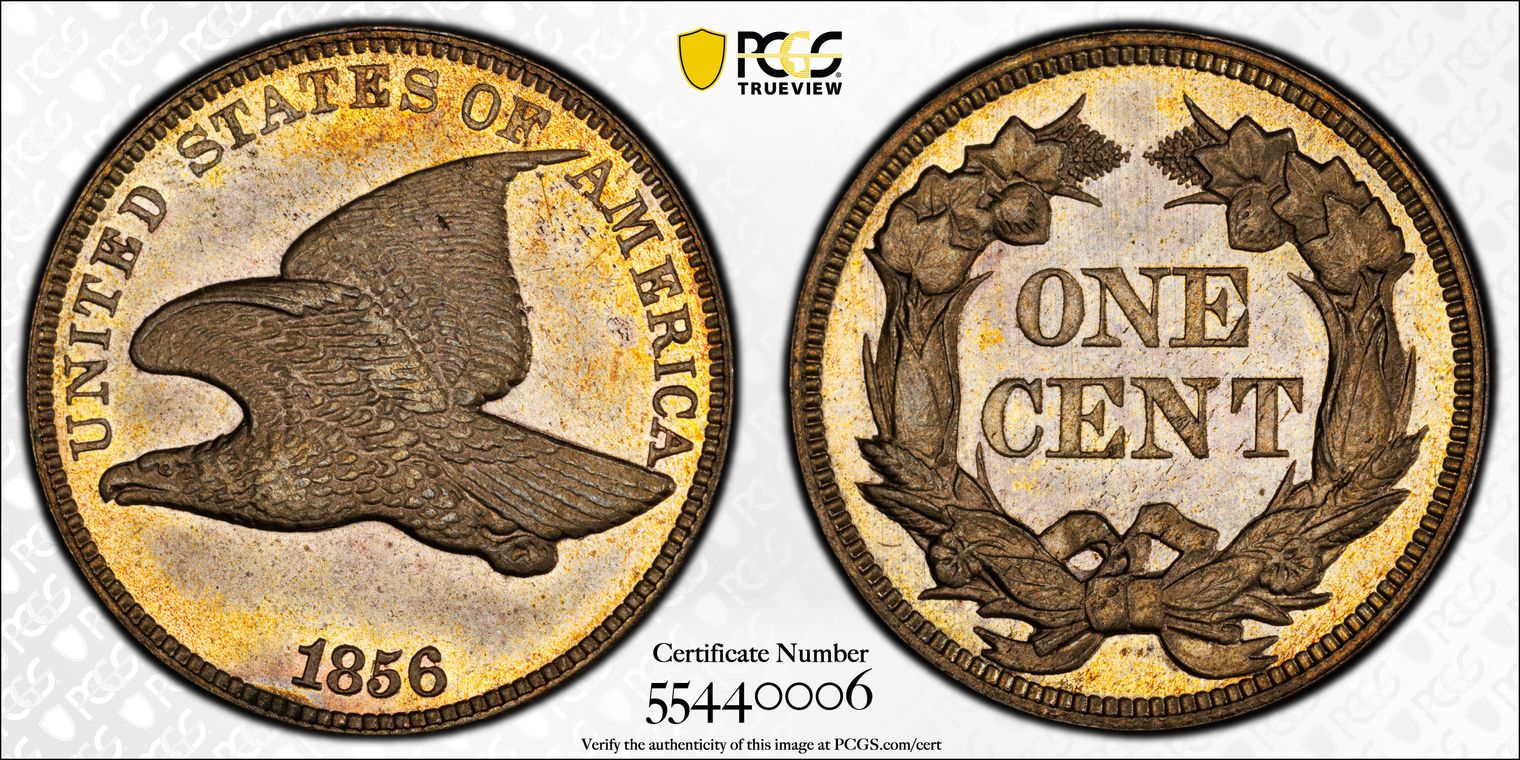
1856 1C MS66 PCGS EEPS, Snow-3 Die Variety, Die Stage A. Provenance: Ex Joseph P. Gorrell Collection and Greensboro Collection. This striking 1856 Flying Eagle cent was the first coin to receive a Eagle Eye Photo Seal (see photo of previous cert #9949371 with Old Green Holder). Eye appeal is exceptional - especially notable are the lilac hues beautifully contrasting against intense golden hues. It ranks among the finest known examples of the Snow-3 die variety, one of only two graded MS66 by PCGS (a third MS66 is actually a Snow-5, and Flying Eagle expert Rick Snow has determined all Snow-5s are actually Proofs), and it may very well be the finest MS Snow-3, as it is the only MS Snow-3 which has always been graded MS66. While the other MS66 Snow-3 achieved a record auction price of $343,125 in 2023, this particular coin was acquired for a remarkable $192,000 (Heritage - Nov 21, 2024 - lot #3624). This favorable acquisition price may have been influenced by collector interest in a higher-graded (PR67+) Proof-attributed Snow-3 example sold later the same day. Notably, this MS66 coin previously sold for $172,500 over two decades prior (Heritage - Jan 7, 2004 - lot #2010). With inflation, that $172,500 in 2004 would be $295,000 in 2025 (based on https://www.usinflationcalculator.com/), demonstrating that the $192,000 was a complete steal. The Snow-3 variety, along with the Snow-1, represents the "Original Striking" of 1856 Flying Eagles (Snow-5s may also have been part of the Original striking). These important Original coins were presented to key U.S. officials to advocate for the Small Cents Act of 1857. The Original Striking sequence began with rare Snow-1 Proofs, followed by the unique "Bluebird" Proof Snow-3 (also Die Stage A), and then the Mint State Snow-3s, including this Die Stage A specimen. Characteristic of all Snow-3 coins (excluding the Proof "Bluebird"), this example exhibits a clear weakness of strike, particularly noticeable on the eagle's breast feathers when compared to the sharper detail of the "Bluebird" (cert #38725098). This weakness of strike confirms its Mint State designation and offers a direct point of comparison with the Proof example of the same die variety. Die Stage A coins, identified by diagonal die lines through UNITED, have Proof-like medium mirrors. However, the mirrors on this coin are much less pronounced than they are on the other MS66 Snow-3 (cert #81467176) and the fields of this coin are approaching the satiny luster characteristic of die stage B. In addition, the weakness of strike is much more obvious here than it is with the other MS66 Snow-3 (cert #81467176). For these reasons, it's pretty obvious this coin is not a Proof.
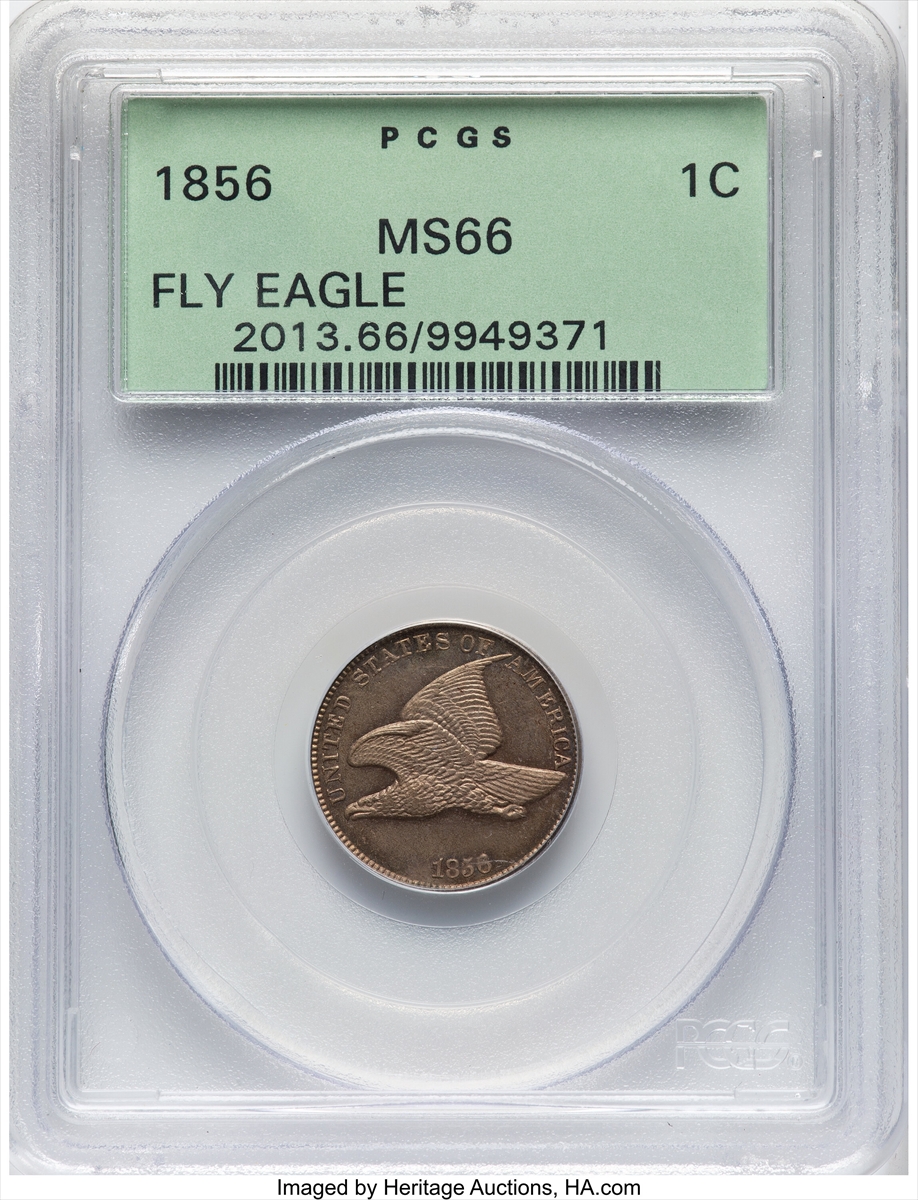
1856 1C MS66 PCGS EEPS, Snow-3 Die Variety, Die Stage A. Provenance: Ex Joseph P. Gorrell Collection and Greensboro Collection. This striking 1856 Flying Eagle cent was the first coin to receive a Eagle Eye Photo Seal (see photo of previous cert #9949371 with Old Green Holder). Eye appeal is exceptional - especially notable are the lilac hues beautifully contrasting against intense golden hues. It ranks among the finest known examples of the Snow-3 die variety, one of only two graded MS66 by PCGS (a third MS66 is actually a Snow-5, and Flying Eagle expert Rick Snow has determined all Snow-5s are actually Proofs), and it may very well be the finest MS Snow-3, as it is the only MS Snow-3 which has always been graded MS66. While the other MS66 Snow-3 achieved a record auction price of $343,125 in 2023, this particular coin was acquired for a remarkable $192,000 (Heritage - Nov 21, 2024 - lot #3624). This favorable acquisition price may have been influenced by collector interest in a higher-graded (PR67+) Proof-attributed Snow-3 example sold later the same day. Notably, this MS66 coin previously sold for $172,500 over two decades prior (Heritage - Jan 7, 2004 - lot #2010). With inflation, that $172,500 in 2004 would be $295,000 in 2025 (based on https://www.usinflationcalculator.com/), demonstrating that the $192,000 was a complete steal. The Snow-3 variety, along with the Snow-1, represents the "Original Striking" of 1856 Flying Eagles (Snow-5s may also have been part of the Original striking). These important Original coins were presented to key U.S. officials to advocate for the Small Cents Act of 1857. The Original Striking sequence began with rare Snow-1 Proofs, followed by the unique "Bluebird" Proof Snow-3 (also Die Stage A), and then the Mint State Snow-3s, including this Die Stage A specimen. Characteristic of all Snow-3 coins (excluding the Proof "Bluebird"), this example exhibits a clear weakness of strike, particularly noticeable on the eagle's breast feathers when compared to the sharper detail of the "Bluebird" (cert #38725098). This weakness of strike confirms its Mint State designation and offers a direct point of comparison with the Proof example of the same die variety. Die Stage A coins, identified by diagonal die lines through UNITED, have Proof-like medium mirrors. However, the mirrors on this coin are much less pronounced than they are on the other MS66 Snow-3 (cert #81467176) and the fields of this coin are approaching the satiny luster characteristic of die stage B. In addition, the weakness of strike is much more obvious here than it is with the other MS66 Snow-3 (cert #81467176). For these reasons, it's pretty obvious this coin is not a Proof.
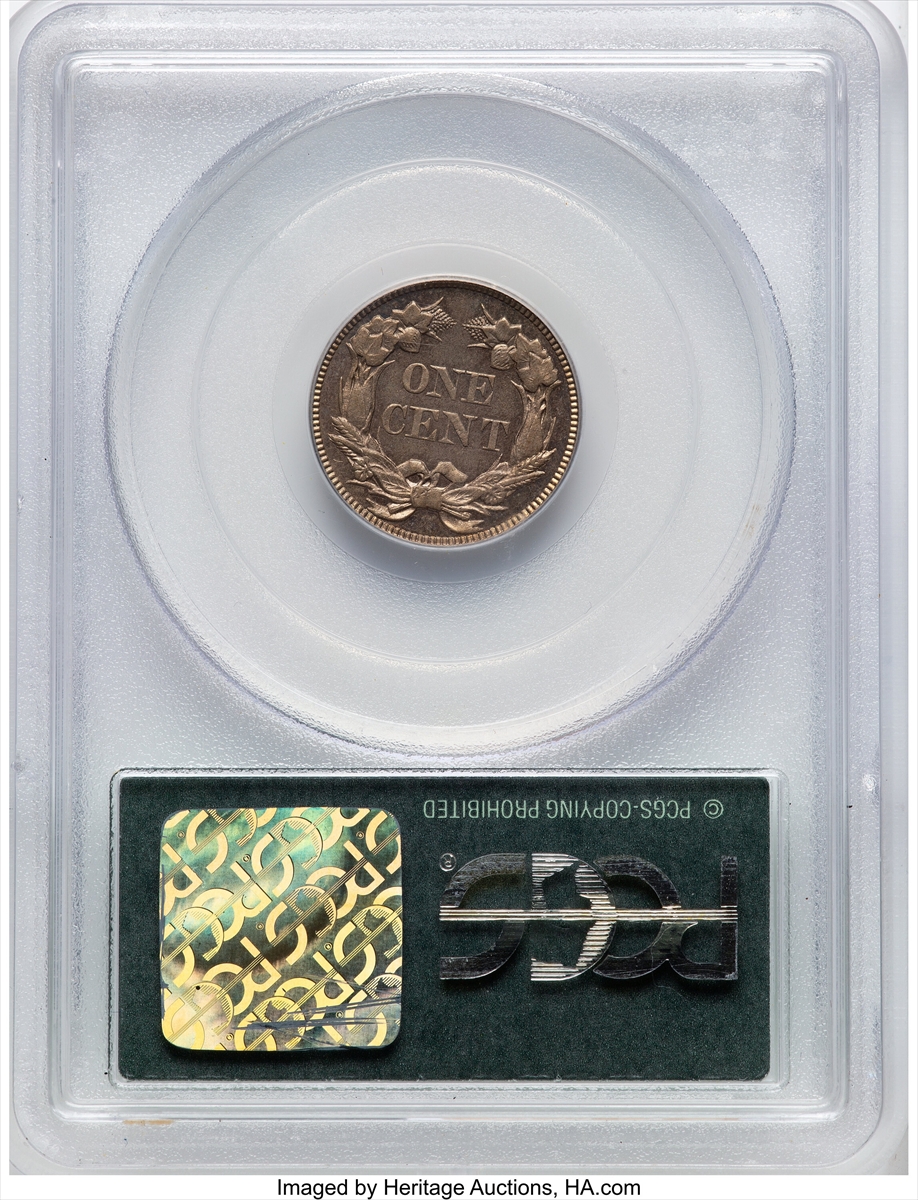
1856 1C MS66 PCGS EEPS, Snow-3 Die Variety, Die Stage A. Provenance: Ex Joseph P. Gorrell Collection and Greensboro Collection. This striking 1856 Flying Eagle cent was the first coin to receive a Eagle Eye Photo Seal (see photo of previous cert #9949371 with Old Green Holder). Eye appeal is exceptional - especially notable are the lilac hues beautifully contrasting against intense golden hues. It ranks among the finest known examples of the Snow-3 die variety, one of only two graded MS66 by PCGS (a third MS66 is actually a Snow-5, and Flying Eagle expert Rick Snow has determined all Snow-5s are actually Proofs), and it may very well be the finest MS Snow-3, as it is the only MS Snow-3 which has always been graded MS66. While the other MS66 Snow-3 achieved a record auction price of $343,125 in 2023, this particular coin was acquired for a remarkable $192,000 (Heritage - Nov 21, 2024 - lot #3624). This favorable acquisition price may have been influenced by collector interest in a higher-graded (PR67+) Proof-attributed Snow-3 example sold later the same day. Notably, this MS66 coin previously sold for $172,500 over two decades prior (Heritage - Jan 7, 2004 - lot #2010). With inflation, that $172,500 in 2004 would be $295,000 in 2025 (based on https://www.usinflationcalculator.com/), demonstrating that the $192,000 was a complete steal. The Snow-3 variety, along with the Snow-1, represents the "Original Striking" of 1856 Flying Eagles (Snow-5s may also have been part of the Original striking). These important Original coins were presented to key U.S. officials to advocate for the Small Cents Act of 1857. The Original Striking sequence began with rare Snow-1 Proofs, followed by the unique "Bluebird" Proof Snow-3 (also Die Stage A), and then the Mint State Snow-3s, including this Die Stage A specimen. Characteristic of all Snow-3 coins (excluding the Proof "Bluebird"), this example exhibits a clear weakness of strike, particularly noticeable on the eagle's breast feathers when compared to the sharper detail of the "Bluebird" (cert #38725098). This weakness of strike confirms its Mint State designation and offers a direct point of comparison with the Proof example of the same die variety. Die Stage A coins, identified by diagonal die lines through UNITED, have Proof-like medium mirrors. However, the mirrors on this coin are much less pronounced than they are on the other MS66 Snow-3 (cert #81467176) and the fields of this coin are approaching the satiny luster characteristic of die stage B. In addition, the weakness of strike is much more obvious here than it is with the other MS66 Snow-3 (cert #81467176). For these reasons, it's pretty obvious this coin is not a Proof.
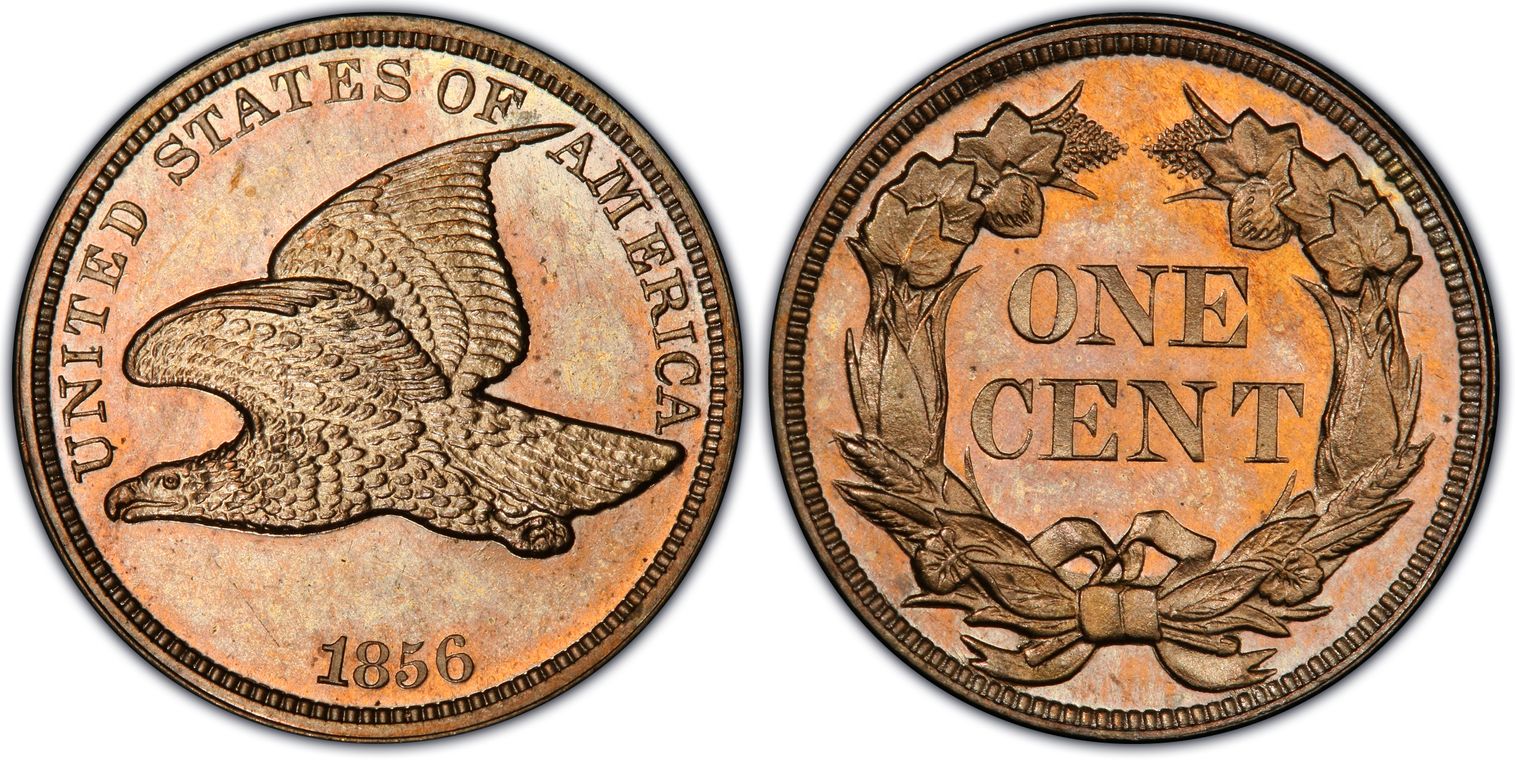
1856 1C PR64CAM PCGS CAC EEPS, Snow-2 Die Variety. Provenance: Ex Q. David Bowers ('Reference Collection'), Fore, and Wright. The Snow-2 die variety of the 1856 Flying Eagle cent is among the most elusive, with a mere six specimens known to exist. This coin stands as a numismatic treasure, holding two significant distinctions: 1) The Finest Known: This is the highest-graded Snow-2 known. While an NGC-certified PF65 exists, a direct comparison awaits its potential cross-over to PCGS. 2) A Cameo Rarity: It is one of only three Cameo (CAM) designations among all known 1856 Flying Eagle Proofs, showcasing a striking contrast between frosted devices and deeply mirrored fields. Unlike the Snow-1 and Snow-3 (and possibly Snow-5) varieties, which represent the "Original Striking" intended for influential figures to support the Small Cents Act of 1857, the Snow-2 and the Snow-4 varieties were later Restrike Proofs. These were produced in limited quantities for eager collectors in 1857 and 1858, respectively. In contrast, the Snow-9 variety saw much larger mintages well into the 1860s as collector interest in the original 1856 issues grew. This Proof Cameo Snow-2 offers a fascinating glimpse into the early awareness and collecting of these historically significant 1856 Flying Eagle cents. Its extreme rarity, combined with its exceptional quality and Cameo designation, makes it a true centerpiece of any numismatic collection.
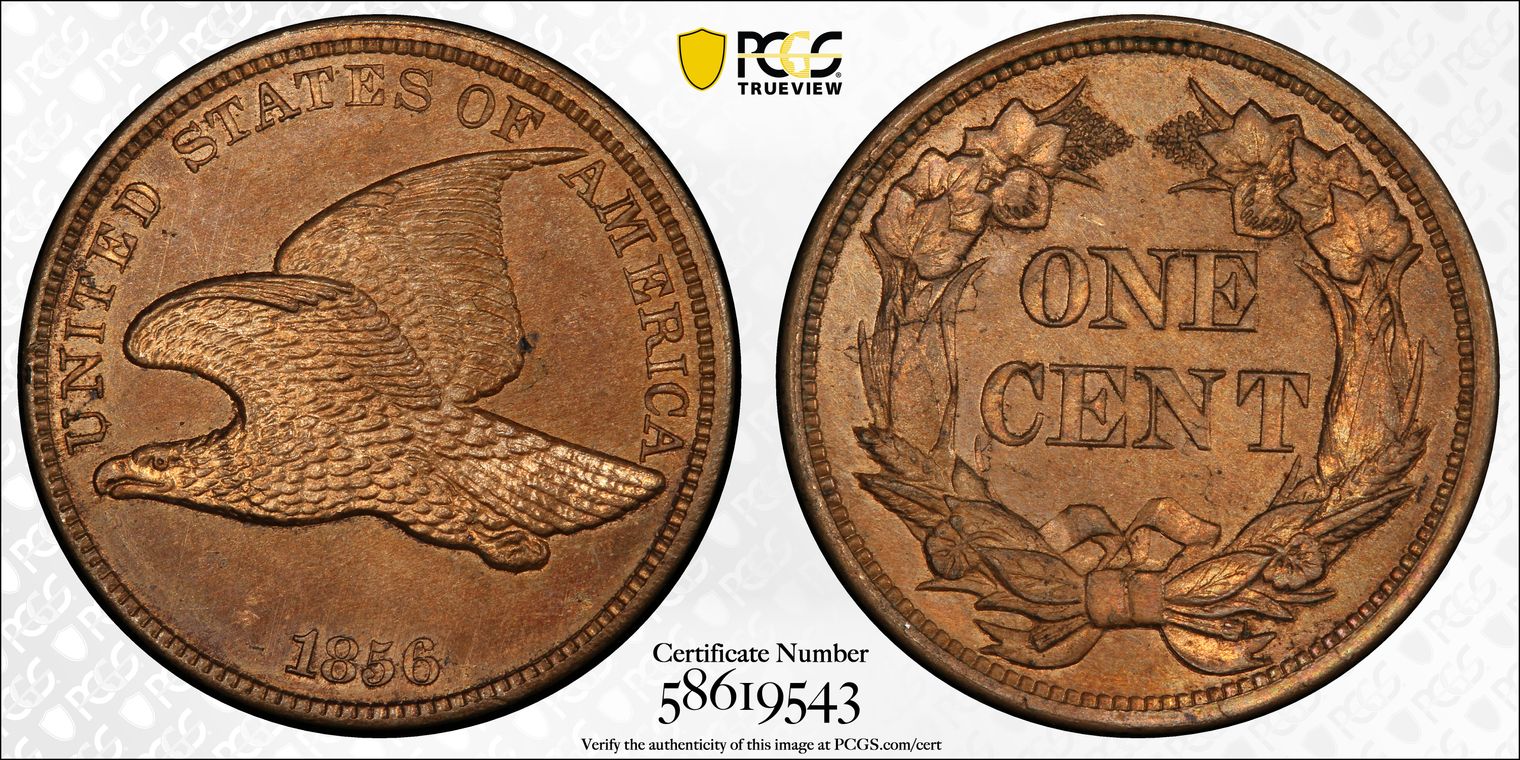
1856 1C PR65 PCGS CAC EEPS, Snow-5 Die Variety. Provenance: Ex Screaming Eagles and Wright. This coin is a truly exceptional example of the rare Snow-5 die variety of the 1856 Flying Eagle cent. With only fourteen known specimens, the Snow-5 is one of the 1856 rare proof varieties, along with Snow-1, Snow-2, Snow-3 (the “Bluebird”), and Snow-4. This specific coin is the third-finest known example of its kind (only two finer: 1) PR66 PCGS CAC 2) attributed as MS and graded MS66 PCGS CAC), with its coveted CAC endorsement affirming its exceptional quality and eye appeal, a distinction that other PR65-graded Snow-5s lack. The Snow-1, Snow-3, and potentially the Snow-5 varieties were part of this original striking for the purpose of influencing Congress and other VIPs to garner support for the Small Cents Act. The Snow-2, Snow-4, and Snow-9 (not one of the rare proofs) varieties are restrikes which were produced later for collectors. The Snow-5 variety occupies a unique and intriguing position within this historical narrative. Unlike the other rare proofs where their "Original" or "Restrike" status is definitively established, the origin of the Snow-5s remains a subject of ongoing numismatic research. There is currently insufficient information to determine with certainty whether they belong to the Original Striking or were later Restrikes (detailed explanation can be found here: https://nnp.wustl.edu/library/book/639559). This ambiguity only adds to their allure and significance. Regardless of their origin, the Snow-5s are prized for their rarity and for their place among the distinguished rare die pair varieties of the 1856 Flying Eagle Cent.